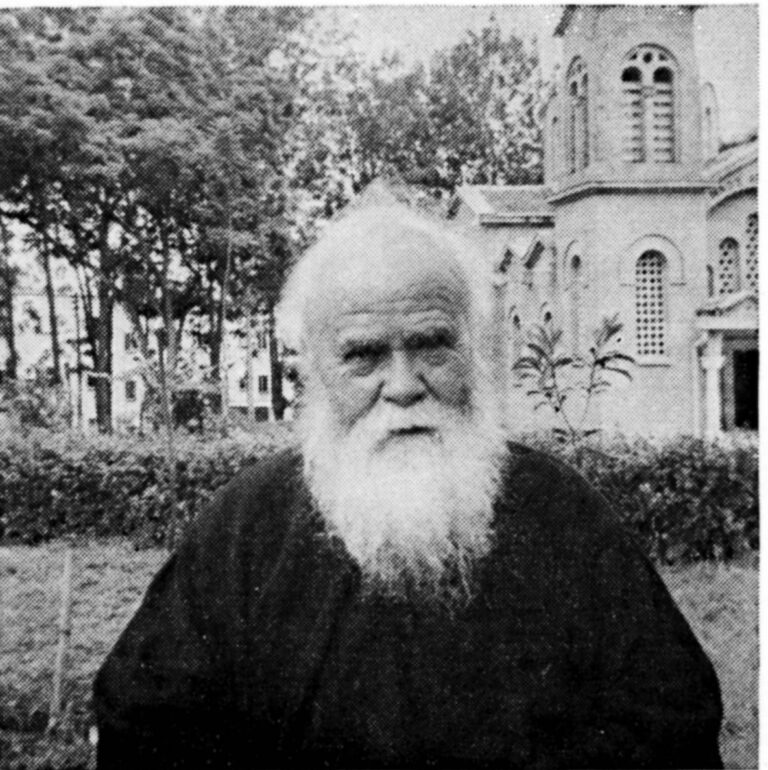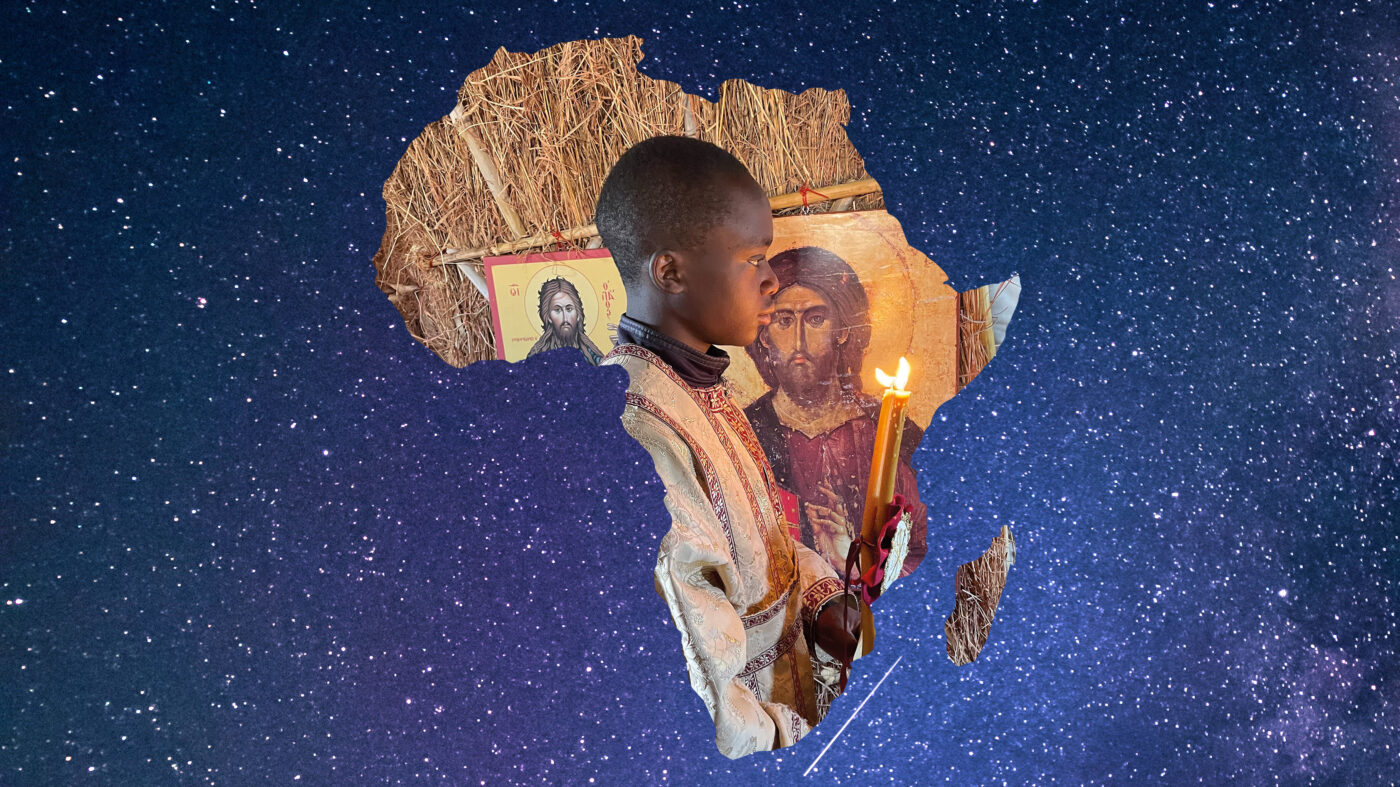
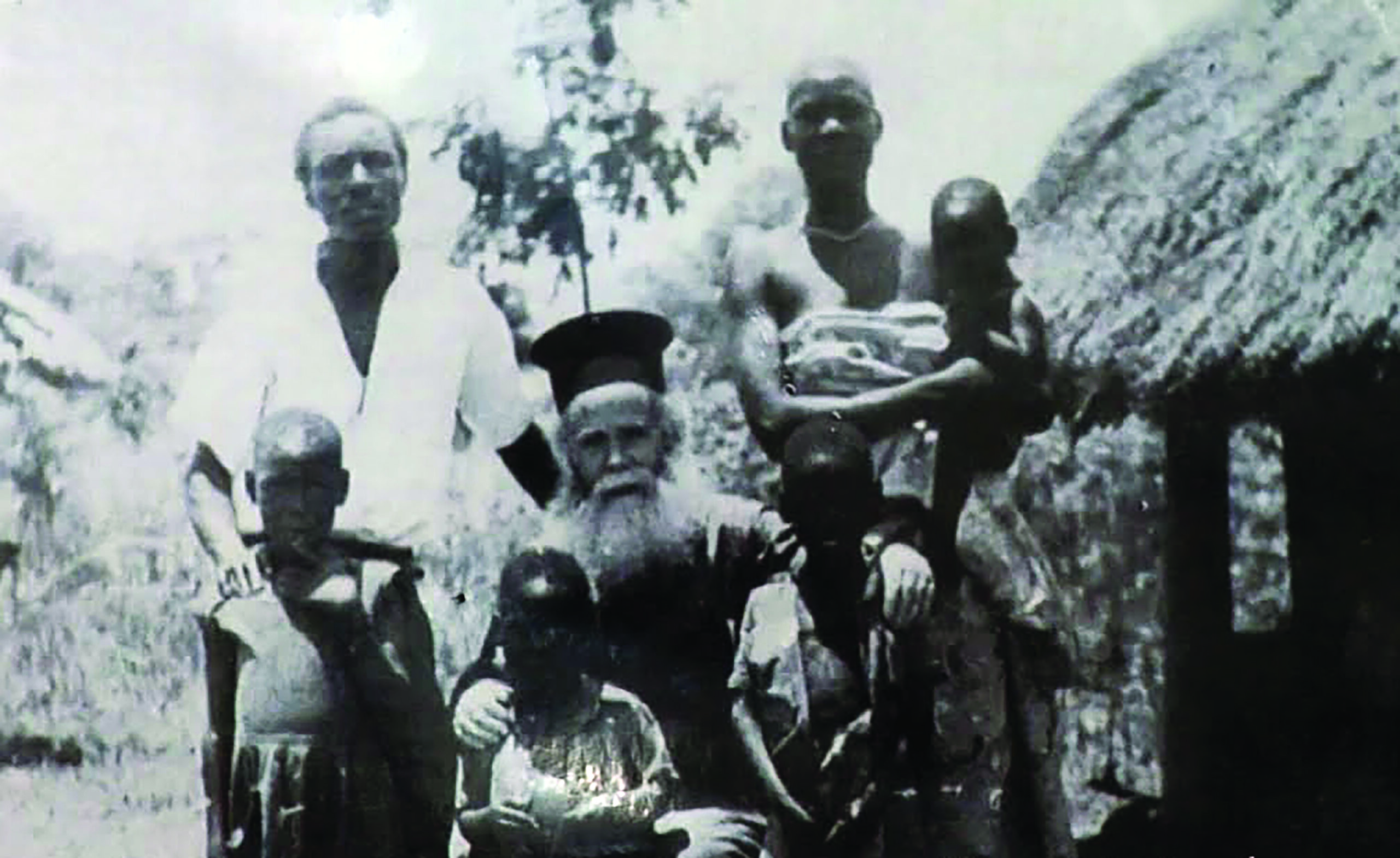
Memories from Saint Chrysostomos Papasarantopoulos’s Passage through East Africa
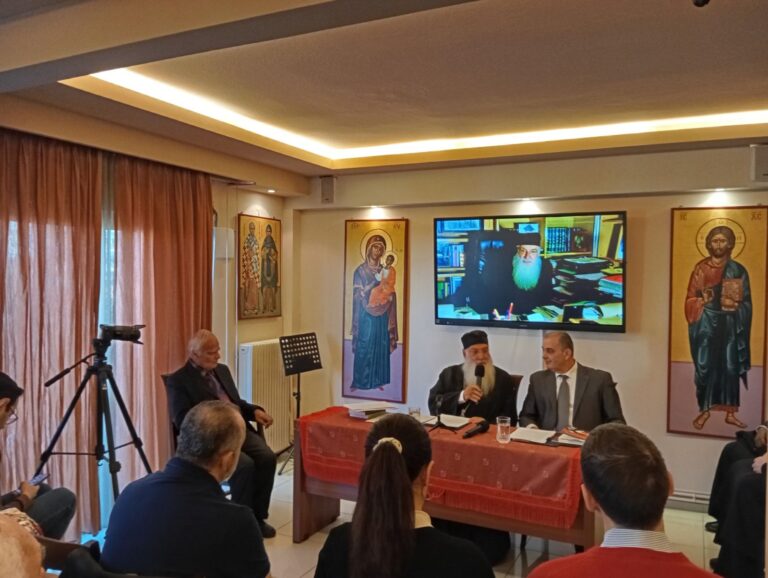
Excerpt from the Fraternity’s event “Memory of Holy Missionaries” at the Aristotle University of Thessaloniki Ceremony Hall (December 2023)
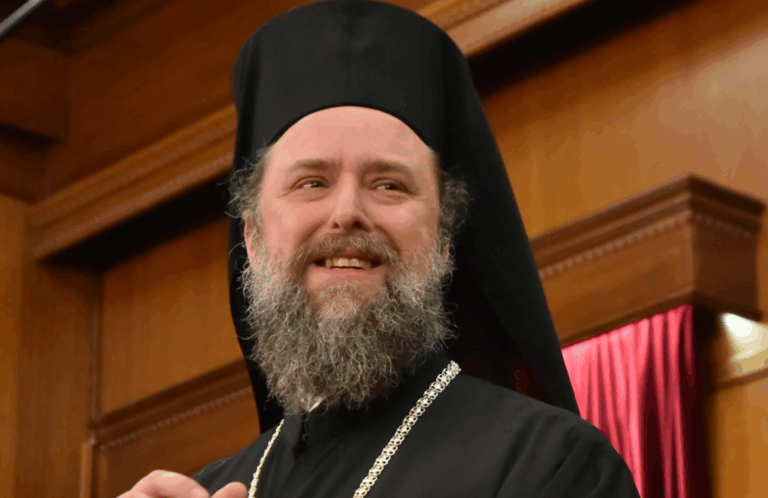
I am delighted tonight to have this exceptional opportunity to be in a place that festively celebrates sixty years of its life and activity in the field of Orthodox Missions. Perhaps many of you wonder how one can write memories and events about someone they never met in their life.
I try my best to be accurate and careful in my judgments and considerations regarding persons and events with whom I had no personal contact. I believe that throughout each of our journeys, here in our temporary abode, we should under no circumstances doubt, despise, or judge, even with our own theories and calculations.
I say this because I have gathered material related to the life and work of Father Chrysostomos from his personal archive and his personal diary entries, and I have decided to include some of his thoughts in my speech tonight, which I believe will help us all in our spiritual cultivation.
Provisions for Life: Love, Discernment, Offering
Throughout our earthly life, we will always have as our weapon selfless offering, discernment, and above all, love. I was not present when the Orthodox Mission was founded, or rather “The Friends of Uganda,” because I was still a high school student.
Nor was it possible for me to be in Africa where Father Chrysostomos Papasarantopoulos served. And yet, as the course of my life unfolded, it brought me so close to them, even though I lived far away, to such an extent as if I had been present.
At an unsuspecting time, during my many years of service here in the Black Continent, I began to write and publish my studies related to people I met.
Women or men, impressions and events for gathering rich material for the writing of the recent history of our Orthodox Church, which had a direct connection with Orthodox Missions.
For some of these individuals, already, without knowing much about their sanctity, unintentionally and with a hidden and deep enthusiasm, I heartily wrote my humble thoughts, even for one of them when I was 15 years old. Others naturally followed later, with the main themes being love, humility, forgiveness, selflessness, discernment, and sacrifice.
Thus, in the lives of those who willingly sacrificed their very lives to support their neighbor, this sacrificial love of selflessness and obedience to the will of God holds a primary role, precisely as Father Chrysostomos Papasarantopoulos exemplified, who was 57 years old upon his arrival in East Africa and, I might add, suffered from various ailments.
This communion of love with our suffering and wronged fellow human beings brings us all closer to God Himself. This act of sacrifice by Father Chrysostomos benefits not only our neighbor but also us, who, as people with weaknesses and temptations, suffer internally and are tormented, while we have beside us actions and deeds that can easily save us and free us from the various complications of our lives.
However, it is difficult for us, and often we set it aside. We pay no attention to it, even though it is so important and forms the basis for our own salvation and that of our neighbor. We have no right to disregard God’s plan and divine interventions for every human being.
I find different ways for the disorder we create within our soul when it fundamentally shames us, as we refuse to allow this pure love of God that frees us from our weaknesses and malicious acts. We hear about love and forgiveness for our neighbor, and we hide.
We do not want to recognize in the face of our neighbor the reality that all people, regardless of color, race, origin, and background, possess this authentic and genuine unpretentious sacredness in the person who is called and moves among us in the image-bearing creation of God Himself.
In my mind comes the excellent parable of the Good Samaritan, which truly expresses the true and selfless love for our fellow human being, which ultimately leads us to holiness itself. With this spirit of pure love and acceptance of every human being, the Lord calls us all, without asking who our neighbor is.
To give him whatever he needs and to always try to transmit to him this virtue of love that gives us physical and mental strength to keep ourselves closer to God Himself.
Allow me to make a digression because recently the Ecumenical Patriarchate proclaimed Sister Gavrilia as a saint, and because I knew her personally and Father Chrysostomos, of course, worked with her for two years, there were some thoughts against her, and in a way, they could not understand the role that this holy soul played in saving some people, as she herself felt it and as it is expressed in many of her letters to Father Chrysostomos Papasarantopoulos in exactly the same way.
We are all human beings with weaknesses and passions, but we strive to keep ourselves as far as possible from the ailments of our body and soul. We make a dynamic struggle to keep ourselves within this God-inspired love for our neighbor, to be sure that only in this way will we be able to keep God Himself in our hearts.
In this journey of our endless earthly life, a true awakening is the mystical yet so hopeful approach that liberates us. It brings us peace and grounds us, whether we want it or not.
Thus, we reach those heights that unite us with heaven. So, at this peak that we ascend, at our destination, we are expected to act and increase our efforts to unite with the highest of virtues, which is none other than love, as I mentioned earlier. Father Chrysostomos Papasarantopoulos frequently refers to this topic in his diary entries.
That is, to unite the heavenly with the earthly. May all our deeds be done in love. Besides, only then will we be able to feel an inexplicable euphoria of joy and gladness within us if this supreme path of love for our neighbor is intensely cultivated.
The Spirit of Father Chrysostomos
Perhaps you wonder why I insist on this topic. It is due to the influence of the writings of Father Chrysostomos Papasarantopoulos. Because we, as laborers of the Evangelical Message, must acquire a strong sense of love for every human person we encounter on our path.
And this is what the Holy Elder Chrysostomos did. People who have not even heard of the passage of someone who bore the name Christ are waiting to see this inner change of their soul that springs from the unique forerunner and inspirer of this love that harmonizes everything, and thus no one can erase or disappear it, as it is a gift. It is an irreplaceable gift.
And a guiding force to reach our ultimate destination, bathed in the richness of that pure love which edifies us and grants us eternal rest. This, I reiterate, was Father Chrysostomos Papasarantopoulos, who was able to labor for 12 years in the African mission field.
So, as I sat and wrote these thoughts of mine on a morning of serenity and self-control, contemplating how negative our self is and how the world, driven by selfish motives, does not accept this, the so simple yet essential element of love for anyone, which is undoubtedly the characteristic of our faith.
And we hear various people comment if they see us going into the jungles and meeting people, whether Muslims, atheists, or traditionalists, because they are not baptized, and we wonder how we will evangelize people who have not even heard of Christ if we do not approach them.
This place where we have worked all these years gives us the true picture of a tragic moment directly connected to the daily life of our own lives. If we want to reach the height of submission to God’s will, that is, to allow ourselves to benefit our neighbor and our fellow human beings who are spiritually and physically wounded, completely isolated from others.
What should move us is the need related to our brother, who in his person is related to God Himself, the creator and maker of us all, of all His creation. It is this work of love, of compassion, of acceptance that ultimately elevates us and emphasizes with boldness that the only way to reach the height of holiness and perfection is this.
Our persistence in this will ultimately prove how important the work we do for our neighbor is, to such an extent that we sacrifice everything to give to this image of God, which, as we have already noted, will save us because we will thus have the opportunity to receive the infinite mercy and extreme condescension of our Lord.
We will experience the Divine Grace exactly, no matter how impossible it seems to us due to our human weaknesses and temptations, when we are on the front line, ready to sacrifice even our lives to save our neighbor.
A Personal Testimony: Twelve Years of Correspondence with Fr. Chrysostomos
Today we will journey together in the footsteps of the late pioneer of modern Orthodox Missions, Father Chrysostomos, as I had the great blessing, during the 12 years that God deemed him worthy to serve African Orthodoxy of the Greek Orthodox Patriarchate of Alexandria and All Africa, to be in continuous communication through the correspondence we had. Perhaps you wonder if it was a coincidence or God’s providence.
This will emerge from the texts, as my own journey, even from afar, in the various countries where I lived from 1961-1972, during the years he served both in East Africa and in what was then Congo Zaire. It was for me an early impetus and a revelatory invitation to follow in his footsteps, as God, through his prayers and supplications, brought me here to East Africa to continue his work. At least, that is how he prophesied my coming to Africa.
The First Letter
Due to the limited time I have, I will refer only to the first and last letter the Holy Elder wrote to me. But the Elder tells me in his first letter:
“Let us make our acquaintance, as your youthful soul desires. The undersigned, your Christian friend and spiritual father, is Christos Papasarantopoulos in the world.
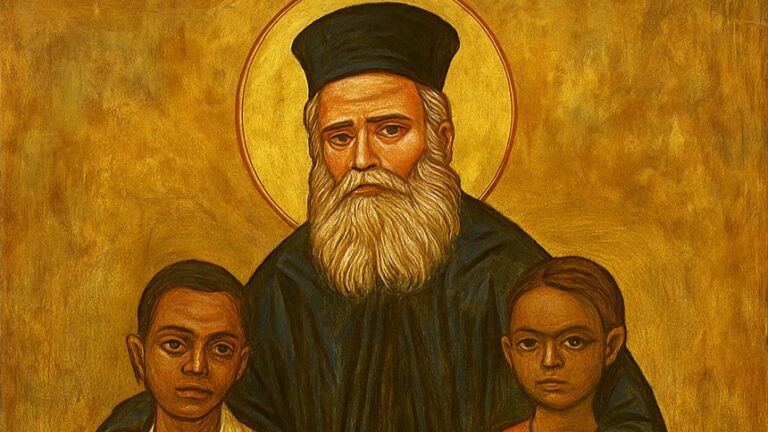
He was born in Vasilitsi, a small, poor village near historic Koroni in the prefecture of Messenia, Peloponnese. From the age of five, he loved letters very much, but his poor family could not advance him beyond the Fourth Grade of Primary School, which his village had. Fortunately, his guardians did not hold him back, but allowed him to enter the monastery at 16, where, with God’s enlightenment, he learned to understand ancient Greek well, this immortal heritage of humanity, and especially to comprehend the originals of the Old and New Testaments and of the Church Fathers.
He remained a novice until, at 20, he joined the ranks of the Greek army for 29 months. Upon his discharge, he returned to the monastery and became the monk, and a little later, the hieromonk Chrysostomos. He dedicated all his years to internal missions, and now an old man, after becoming acquainted with his black brethren, he completed his theology and came here solely to, with the Lord’s cooperation, open the way for new missionaries.
He now has 59 autumns on his weak shoulders. So, my dear Andreas, that was my name before I was ordained, and I was only 15 years old, as I said before, go forth with the grace and help of our Christ. If the Lord allows me to work 8 to 10 years here, I will be happy to hand over the continuation of the sacred work to you, Andreas Tillyrides from Limassol, Cyprus.”
Now, this is, as I said before, a prophecy, it is God’s providence, it is fate, we will see it later. It is a fact that his thoughts moved me, what I had already read had truly brought me closer to God’s will, and how could I have known that after so many years I would find myself in Africa among his black angels, his little Arabs, as he once wrote. Is this not a sign of his true offering and service in this place where today the word of the Gospel is heard everywhere?
The Last Letter
And in these twelve years that we corresponded, I will now read the last letter he wrote to me a month before his repose:
“Here in the quite large city of Kananga, a very great work is being done. The indigenous people themselves called me.
Seventy to one hundred thousand, perhaps even more, in a large area of the country besiege me daily and ask to enter the bosom of Orthodoxy. Soon I must begin baptisms. This week we are converting a small building into an Orthodox Church.
For four consecutive Sundays, they held Divine Liturgy in a good house that they themselves offered us. But as you know, I am old now and very tired. The help of a layman in external works would be invaluable.
But the Lord does not leave me. Why do you hesitate? Go and cast them into the sea.
No, give them to the poor as our Christ said and follow Him. Poor as you are, sacrifice everything for Christ’s sake.
We all have flaws and vices. Let us not only see those of others but also our own.”
The Call of Saint Sophrony: “Go to Africa”
So, with the blessings that Elder Sophrony, now a Saint, gave me when I started confessing to him at 21, I had other personal plans, other visions.
From the first confession I made to him, I enthusiastically announced, after he asked me what I was doing here in London, that I had come to become a musician. I wanted to become a pianist. I had already spent several years at the National Conservatory, the Limassol branch where I was born and raised.
Elder Saint Sophrony turns and tells me: “My dear Andreas, you may want to become a musician, but you must know that God has other plans for you.” And you understand my reaction, without knowing, of course, that I was speaking with a Saint who already knew what I would become. I had no thought of the priesthood, nor did I ever discuss it with Saint Sophrony.
And this invitation from Father Chrysostomos seemed to have, I would say, a secret communication with Saint Sophrony, which, of course, at my young age, I could not comprehend what he meant by these things. Fifteen years had to pass, and indeed, with his blessing, I was to journey to Africa exactly as Saint Chrysostomos Papasarantopoulos described it.
Many deliberations took place, and I insisted and did not want to, of course, but when the moment finally came in 1976, Saint Sophrony, to whom I went to even complain that the late Makarios was destining me for Kenya and that I had to leave as soon as I submitted my doctorate, and you understand how I feel, and immediately the Elder tells me: “Kneel, Andreas. In the name of the Father and of the Son and of the Holy Spirit, go to Africa. God destines you there .” And that was the end, and this whole journey began in January 1977, where I remain to this day.
I had the great blessing, of course, for the late Metropolitan Nektarios Hatzimichalis of Leros, Kalymnos, and Astypalaia, who particularly loved Father Chrysostomos, to come on a trip, and I wanted to show him the places where he lived in Kenya. Indeed, I took him, we visited, we celebrated liturgy, he celebrated liturgy, I was still a layman, but he invited me to visit him at his episcopate because he had something to give me, and indeed I went and stayed there, where I also met Saint Gavrilia, who was very connected with him, and what was the secret, Saint Kalymnos had the archive from Sister Olga Papasarantou of Father Chrysostomos Papasarantopoulos and his diary entries, and he tells me, since you are so connected with Elder Chrysostomos, I will give them to you today, and so he gave me his autobiographical notes and his archive, which I hope one day when it is published, what I am reading now is very little compared to what he himself wrote.
The Diary Entries of a Saint
“The Lord has glory that He deems me worthy to set foot on this black Continent. May His Grace be pleased to let me reach my destination and successfully complete my Mission to the glory of His Holy Name and His Church for the salvation of many souls for whom He sacrificed Himself on the Cross.”
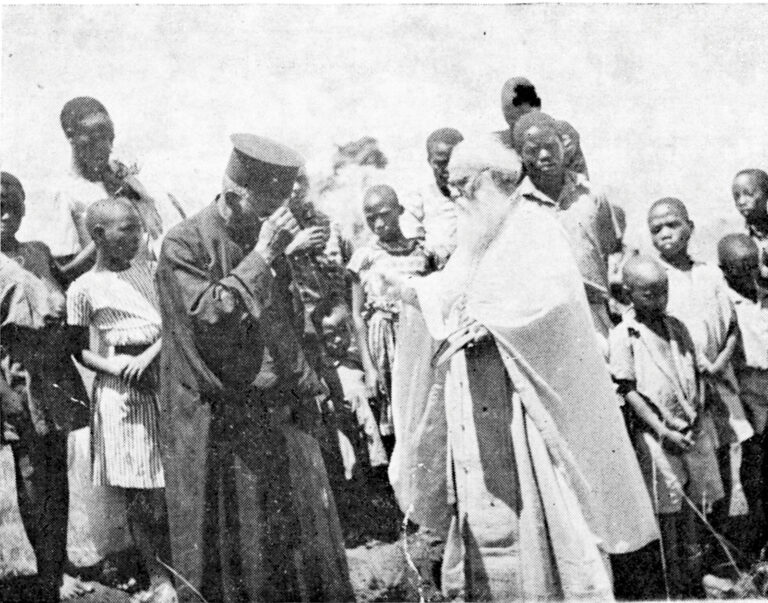
The late Elder and Pioneer of modern Orthodox Mission Overseass, at an advanced age, arrived to evangelize the Africans who were still in darkness, error, and ignorance. He began his missionary journey alone, with the Lord Himself as his helper, because he believed it was time for Orthodoxy to become known and to offer its saving messages to those who had waited two thousand years to know them.
He had no personal ambitions, nor would his presence in Africa bring him any personal gain. He lived until his death in 1972 under difficult conditions and suffered immensely due to his weak health. However, he did not succumb. Everything for Christ, he wrote. Humbly and quietly.
His diary entries are, of course, lengthy, but they are worth it. Glory to the Lord for everything.
“Today is the thirty-fourth anniversary of my ordination. May 5, 1926, Wednesday of Bright Week. What have I offered to my Lord all these years? If I put it down, I think I will find a great deal of liabilities. And my assets? What shall we render to the Lord? Bless, O Lord, the little life You have appointed for us still on this earth to be fruitful. Grant, O Christ, before we give, that we may do something good. The mercy of the Lord gives these rests. Again, enclosed within sight and hearing, the righteous one. And the first attack, O Lord, crush Satan under our feet swiftly.”
The Friends of Thessaloniki
This was Father Chrysostomos Papasarantopoulos, encapsulated within these few lines. His passage through the missionary field of Africa left behind the memory of a good and humble laborer. He was almost unknown, even in ecclesiastical circles. He worked with profound patience and faith, even though the official Church overlooked and disregarded him. His goal was heaven. And not his personal advancement.
As a human being, of course, he was embittered and pained. But he continued his path with more zeal and self-sacrifice. His joy and happiness were seeing the fruits of his works and labors so quickly producing rich spiritual work.
The words of Father Ovadia are moving when he refers to Father Chrysostomos. He writes:
“The ever-memorable Very Reverend Archimandrite Father Chrysostomos Papasarantopoulos, an unpaid laborer, who was active, tireless, vigilant, exemplary, humble, patient, vivid, and truly trustworthy, was a great friend of mine.”
Father Chrysostomos himself, in his first letter from Africa to the first president of the Orthodox Missionary Fraternity, which was then called “The Friends of Uganda,” Mr. Pantelis Bayian, writes the following:
“Great is the power and grace of God and our Savior Jesus Christ. From where is this? Who am I, or what is my father’s house? So that I should be deemed worthy to offer something to my Christ. And furthermore, the Lord sent His angels and removed every obstacle, so that I arrived here without any serious difficulty. It was very moving, and I was brought to tears, when during the journey I saw the doors opening one after another, like those of the prison of the Apostle Peter. So I greet from this distant land my old chosen friends, the friends of Thessaloniki. And I earnestly ask them to pray and intercede that the Lord may enlighten and strengthen me to work a little for His glory and His Church here, where I came obeying His secret command.”
May Father Chrysostomos, wherever he may be, bless the work, and may we, the younger generation, be able to have him as an example in this path that God has set for us.
Thank you.
Learn more about the pioneering missionary Fr. Chrysostomos Papasarantopoulos
Αυτή η σελίδα είναι διαθέσιμη και στα