Mission and Missionaries (of Saint John Chrysostom)
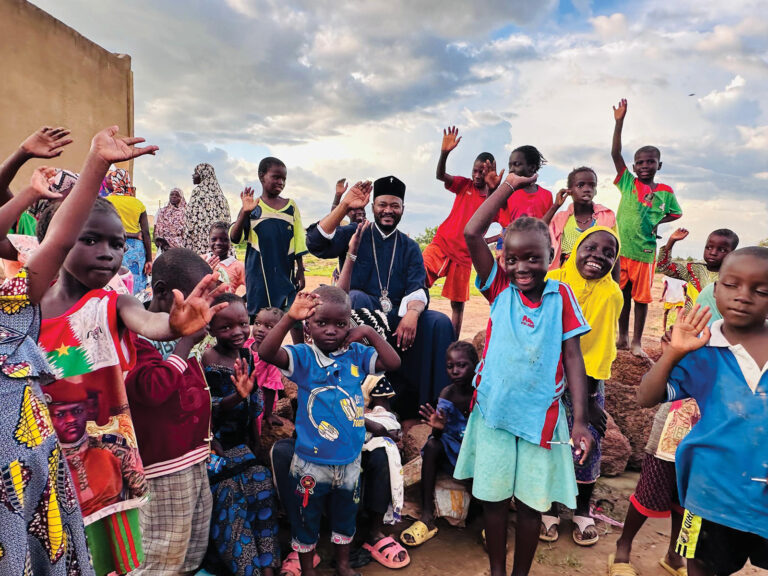
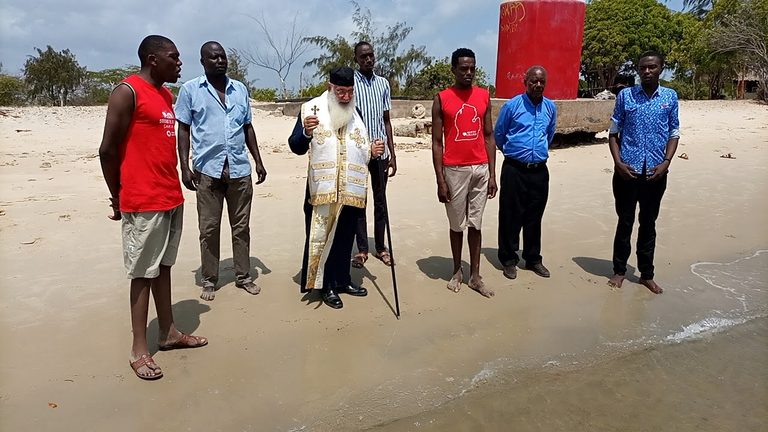
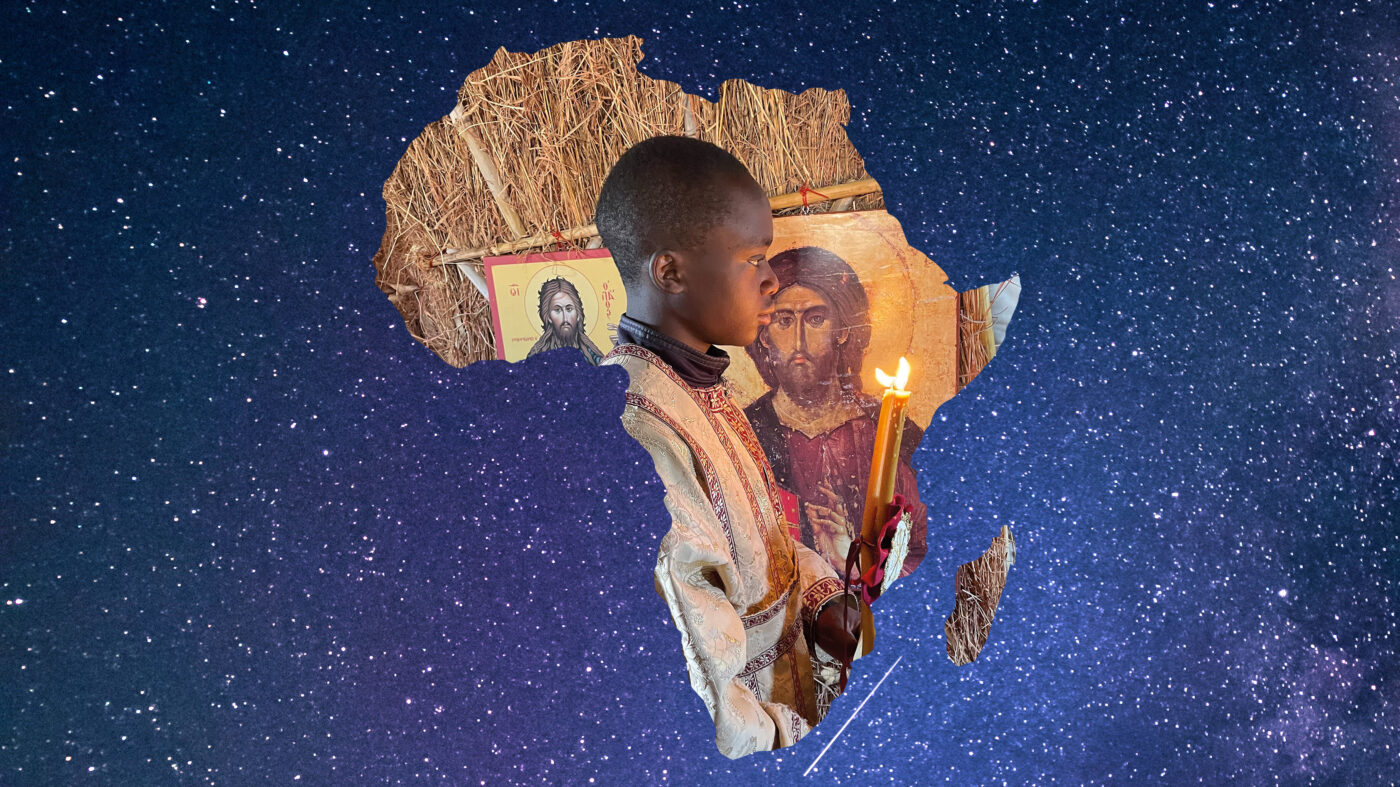
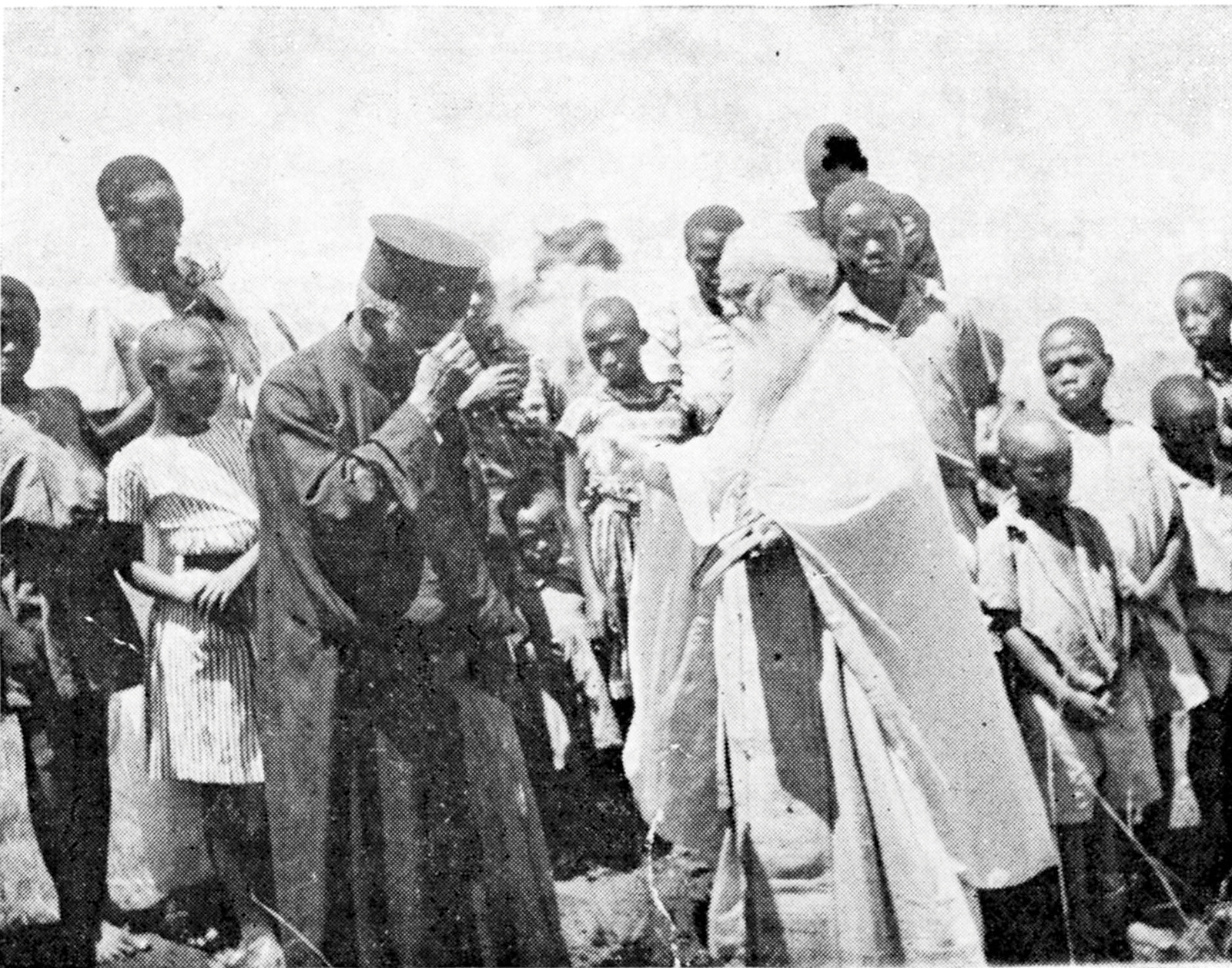
“Whom shall I send, and who will go for us to this people?” These words of God, spoken through Isaiah (Isaiah 6:8), the most eloquent of prophets, constantly and persistently came to my mind when I recently visited the 50-60 newly-illumined African Orthodox Christians of the Acholi tribe, about whom more will be said in another column below in this publication.
At that time, God had no one to send to the religiously and morally rebellious inhabitants of Jerusalem and all of Judea. And He had no one, because the few who had remained faithful and undefiled were hiding, fearful and terrified by the dreadful wickedness of that apostate people. Only one, this very prophet Isaiah, defying every danger for the sake of the divine will, offered himself and answered courageously and most manfully to the divine voice: “Here am I; send me” (ibid.).
Here, however, the situation is quite different. Perhaps there would be some similarity if God’s people were to be sent to those Christians who, for many and various reasons, have distanced themselves from religion and deny Christ and His teaching, either by words and deeds, or by deeds alone (being and living, or living only) “without God in the world” (Ephesians 2:12). Among these, the one being sent should fear, if not death and bodily harm, certainly at least contempt and aversion.
Here, however, we do not have apostate Christians or idolaters ready to defend their ancestral errors with “fire and sword” against the preachers of a new religion sent to them. We have simple, underdeveloped peoples, many of whom, while having heard much about Christianity, have not yet settled on a specific form of it. Moreover, those belonging to various Christian denominations are largely unsupported and hesitant. Political events, as well as the un-Christian life of Europeans, contribute greatly to this. Thus, we have here a thirst for a living Christianity that will satisfy both the external expressions of worship and the inner spiritual world of the native, but also one that is politically free, not serving the political ambitions of this or that state or any particular leader.
Therefore, it is enough for it to be heard somewhere that Christian Orthodoxy exists and that this word signifies the correct Christian teaching and faith, for some, especially among the more educated, to come forward to embrace it and begin missionary work on its behalf, usually with little fruit. Simultaneously with the idea of Orthodoxy, the idea is also spread that Greeks are at the forefront of this correct Christian path. Thus, a Greek – but also any Orthodox missionary of another nationality – will be received with all love and respect and with all honors.
For what can these simple native converts of ours teach, and how can they spread Orthodoxy, which they have embraced? Their knowledge of it is far below elementary. There are not even suitable books for them from which they could draw. And even if there were books, they would be of little benefit if there were no interpreter and teacher of what is being taught. And we receive a “barrage” of pleas from everywhere. We do not hesitate to say that their “heart-rending” supplications constantly strike our ears. “Come enlighten us.” “Come to us.” “Stay with us.” “Send us a teacher of Orthodoxy, an Orthodox Missionary…” and the like.
Hence, our more than three years of close association with the indigenous element of East Africa, thirsting for a Christian foundation, has led us to the following final conclusion: For Orthodox missionary work to be effective and fruitful, at least one Greek (or of another nationality) Orthodox missionary must be placed and remain for a certain number of years among each tribe (or at least each language, as there are also more than one tribe sharing a single language). Naturally, where one is established, he will preferably be a priest. He will study the tribe assigned to him, learn its language well, get to know it from every side and perspective, so that his missionary work may achieve a very good degree of success. In large cities, of course, there must be missionary centers with more than one member, so that there is communication, understanding, and all kinds of replenishment for the isolated ones, so that the entire mission constitutes an organized body and system.
Therefore, some Orthodox young people, who with God’s help have managed to acquire a higher education and whose hearts burn for the glory of Christ and the Mother Church — especially such Greeks, as to them fell the honor of being called first — are invited to respond, as that fervent Prophet did then: “Here am I; send me.”
Not only priests and theologian missionaries are needed, but also other scientists (especially doctors, nurses, agronomists, etc.), who will stand by the side of the priest and, on the one hand, serve the natives within the framework of their science, and on the other hand, as faithful and fervent Christians, will be willing and active supporters of the priest in his Christianizing and civilizing work.
The neologism “missionary supporter” (ἱεραποστολεύς) signifies the pious Christian who, for reasons beyond their will, cannot travel to a foreign country as a missionary. However, because they have the zeal and ardent desire for such work, they contribute everything they can morally and materially to strengthen the missionary work and those undertaking it.
Such “missionary supporters” are therefore called to become the multitudes of pious and Christ-loving people of every country, city, class, age, and gender, and to form groups or teams, committees, councils, and the like for this purpose. And each such group should say to one of the heroic pioneers mentioned above: “Go with the blessing and grace of God. Your brethren are here. You will lack nothing.”
This good beginning of the missionary supporters was made from Thessaloniki1 and Tinos, as we see in another column of our “Bulletin.” May their imitators multiply.
Archimandrite CHRYSOSTOMOS PAPASARANTOPOULOS
April 1, 1964, Information Bulletin, Year 1, Issue 2
- The Saint refers to our Fraternity, which had just been founded four months prior ↩︎
Αυτή η σελίδα είναι διαθέσιμη και στα