The first Orthodox school in Eastern Congo
The initiation of an evangelistic endeavor for our brethren in Africa requires humility, vision, boldness, initiative within the framework of ecclesiastical order, and the missionary’s determination to imitate the Good Shepherd by sacrificing his soul, when necessary, for the rational sheep of Christ’s flock. First and foremost, of course, the divine assistance and grace of God are required, “which heals the weak and replenishes the lacking.”
Therefore, a “beginning” cannot be confined to molds or copied from pastoral manuals, which are – without a doubt – very useful, especially when they are the distillation of experience. However, there are some fundamental principles upon which it is prudent for a new missionary effort to be based.
Many brethren in Africa, especially the overwhelming majority to whom we address ourselves at the “beginning,” are poor people. They lack the absolute necessities. An average European would find it difficult to imagine their way of life if they did not see it up close. For the work of Evangelism to begin, a “bridge” of communication and trust must first be built between the Orthodox priest-shepherd and his listeners, who usually have a confused image of the Orthodox Church, and often ignore it completely. Is it really possible to build this “bridge” solely through preaching and liturgical life? The answer is difficult. However, the example of Christ, the Chief Shepherd, is always guiding. The Lord was concerned with the “healing” of the whole person. First and foremost, He preached “the Gospel of the Kingdom.” This was His primary work. Then He healed the sick. Sometimes He gave bread to people who forgot their food while listening to His word. And with earthly bread, He whetted their appetite for “the Bread that came down from heaven.”
This offering of Christ to the “whole” person teaches us much about missionary work. If we cannot heal the sick like the Holy Apostles, we can, however, with some sacrifices, organize medical centers that protect their health. We can also build schools where, along with the “knowledge” that is a gift from God and helps organize our earthly life, our “well-being,” students can also be initiated into the “knowledge of the true God.” The value of education is enormous from every perspective. That is why it is legislated as compulsory by all states, and international organizations emphasize in their Statutes that it is a right of all people.
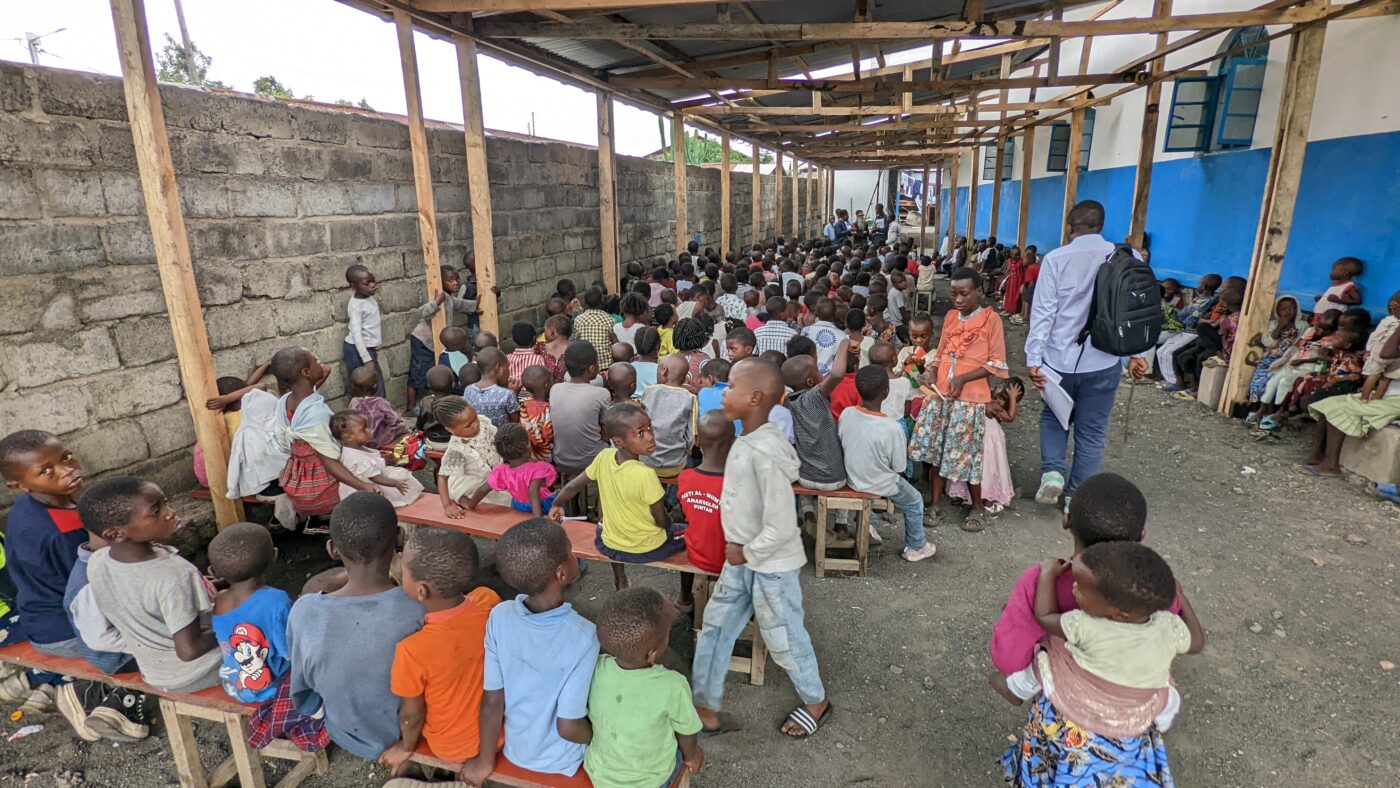
The lack of educational institutions, especially in our Diocese, is a problem.. But why? First of all, the Public Schools to which we seek to send our children usually operate inefficiently and cannot meet the educational needs of the numerous students. Therefore, the children of our local Church, i.e., of Orthodox families or catechumens, attend Public schools or Universities at the expense of the Church. And there are many such children. But even in these schools, there are significant burdens that are unbearable for our Orthodox brethren, who lack their “daily bread.” We omit the fact of frequent illnesses, the hospitalization for which our Church often covers. Roman Catholics and Protestants have many educational institutions in the Kivu region (Eastern Congo) and cover all levels: (kindergartens, primary, secondary, and tertiary education). Students who cannot pay tuition are accepted by Catholics and Protestants into their schools, but they are obliged to remain in their boarding schools and, of course, to attend their ecclesiastical activities and catechism. The result is that Orthodox students develop a mindset different from that adopted by our Church and, in some cases, move away from it.
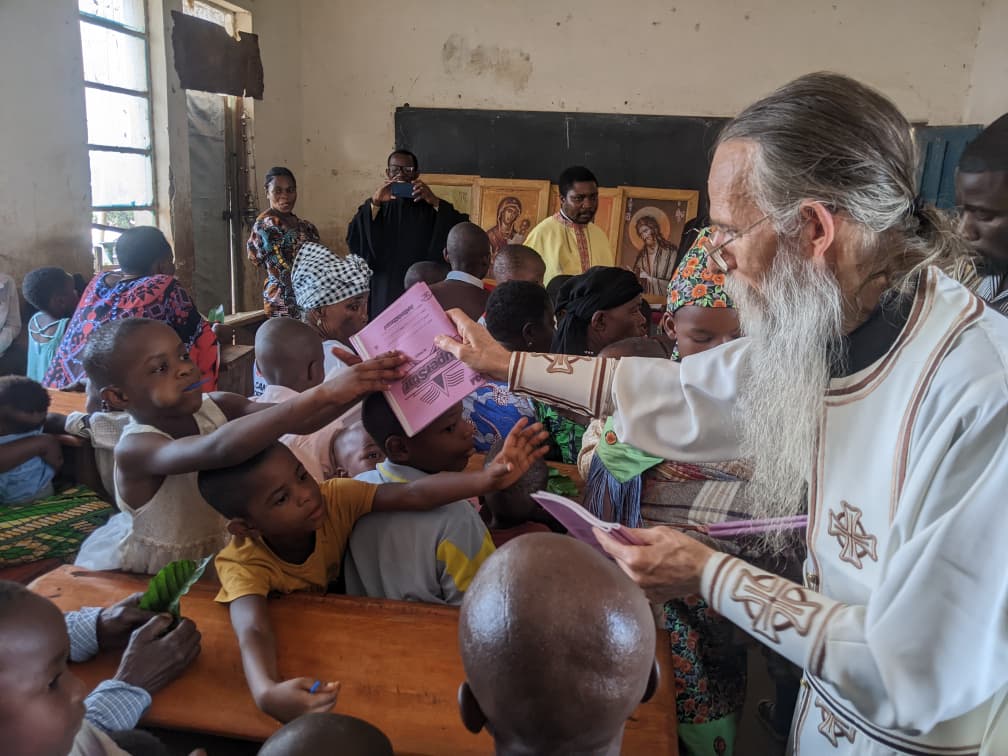
Here, in ecclesiastical schools (in general), the State grants the right for religious education to be taught, for school celebrations to take place, for clergy to have access, and by extension, for catechism to be provided to a large number of children, with the knowledge and consent of their parents, of course. Therefore, when the Orthodox Mission does not have schools, it is deprived of the opportunity to reach out to children and young people. Furthermore, faithful Orthodox Christians can work as teachers or in other auxiliary positions in ecclesiastical schools, thus securing their livelihood.
Of course, the value of Church schools is not limited to these aspects. Many graduates, after their studies, occupy key positions in the state hierarchy, and because they gratefully remember what the school offered them, they are willing to facilitate the Church in its work and help it navigate the labyrinthine paths of endless bureaucracy without major delays. Also, many graduates will become priests, scientists, educators, and from their positions, they will contribute to the spread of the Orthodox Faith. In short, the establishment of schools is a significant investment for the future of the Church.
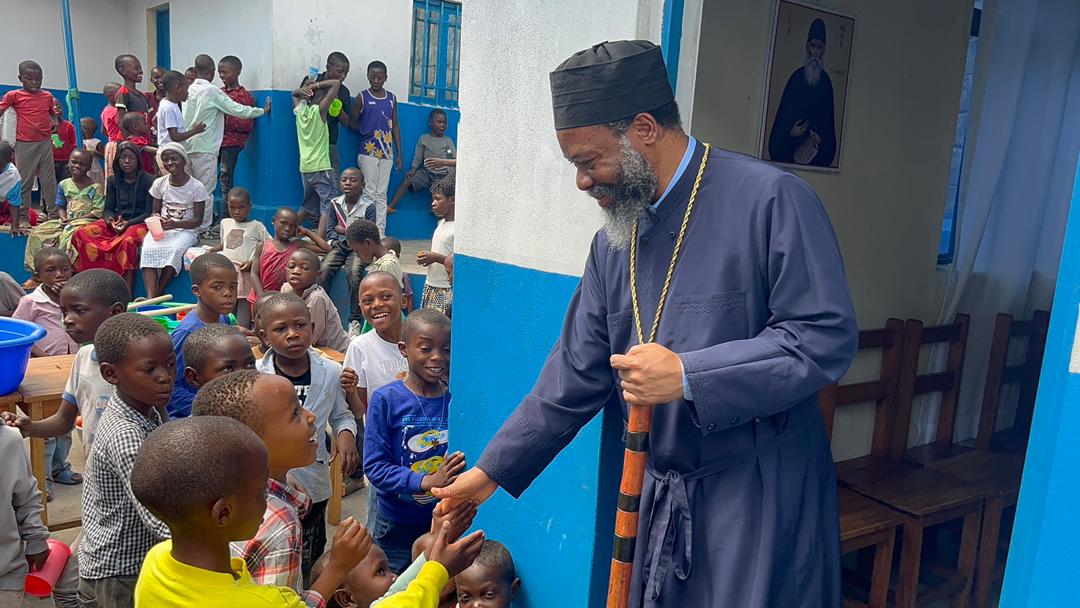
The local “authorities and powers” here primarily evaluate the Church based on “what it offers to the people?” This is their criterion. Thus, when they see Schools, Hospitals, etc., they consider it a “great Church,” it inspires confidence in them, and they are more willing to grant permits, provide facilities, etc. The majority of our brethren here share the same reasoning, who, as in Greece, expect to see social work from the Church.
Undoubtedly, the establishment of a proper school requires great sacrifices. Financial resources are needed for its construction and operation, at least in the initial stage, good teachers, and continuous support from the Church. But it is worth the effort because the school transforms the lives of hundreds of children and brings new blood to the Church. That is why Saint Cosmas of Aetolia said: “It is better to have Greek schools in your place than springs and rivers.” This great Saint, adorned with prophetic charisma, had founded 200 “common schools” and several “Greek” ones, i.e., of a higher level. He believed that the school opens the way to faith, because education enables us to have access to spiritual books and especially to the Holy Scripture.
For all these reasons, our Holy Diocese of Goma and Greater Kivu decided to proceed with the construction in the Parish of Saint Nektarios of Goma, which is the first Parish of the Diocese.
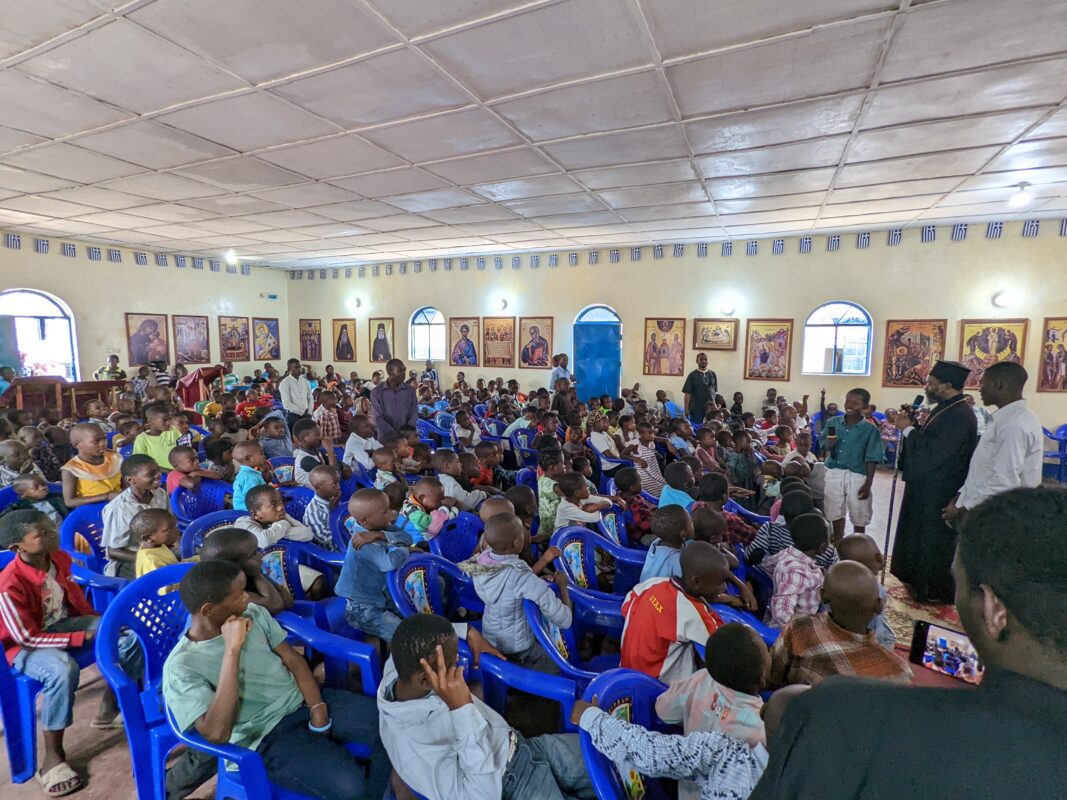
Priority will be given to the Goma school. Why? The Metropolitan Church of St. Nektarios is located within the city and, due to its spiritual and charitable activity, has already become a pole of attraction for many people, both Orthodox and local residents.
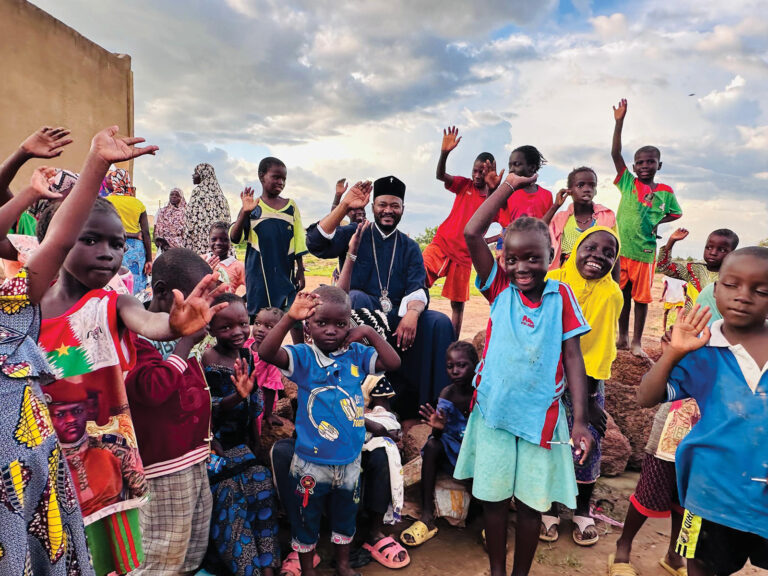
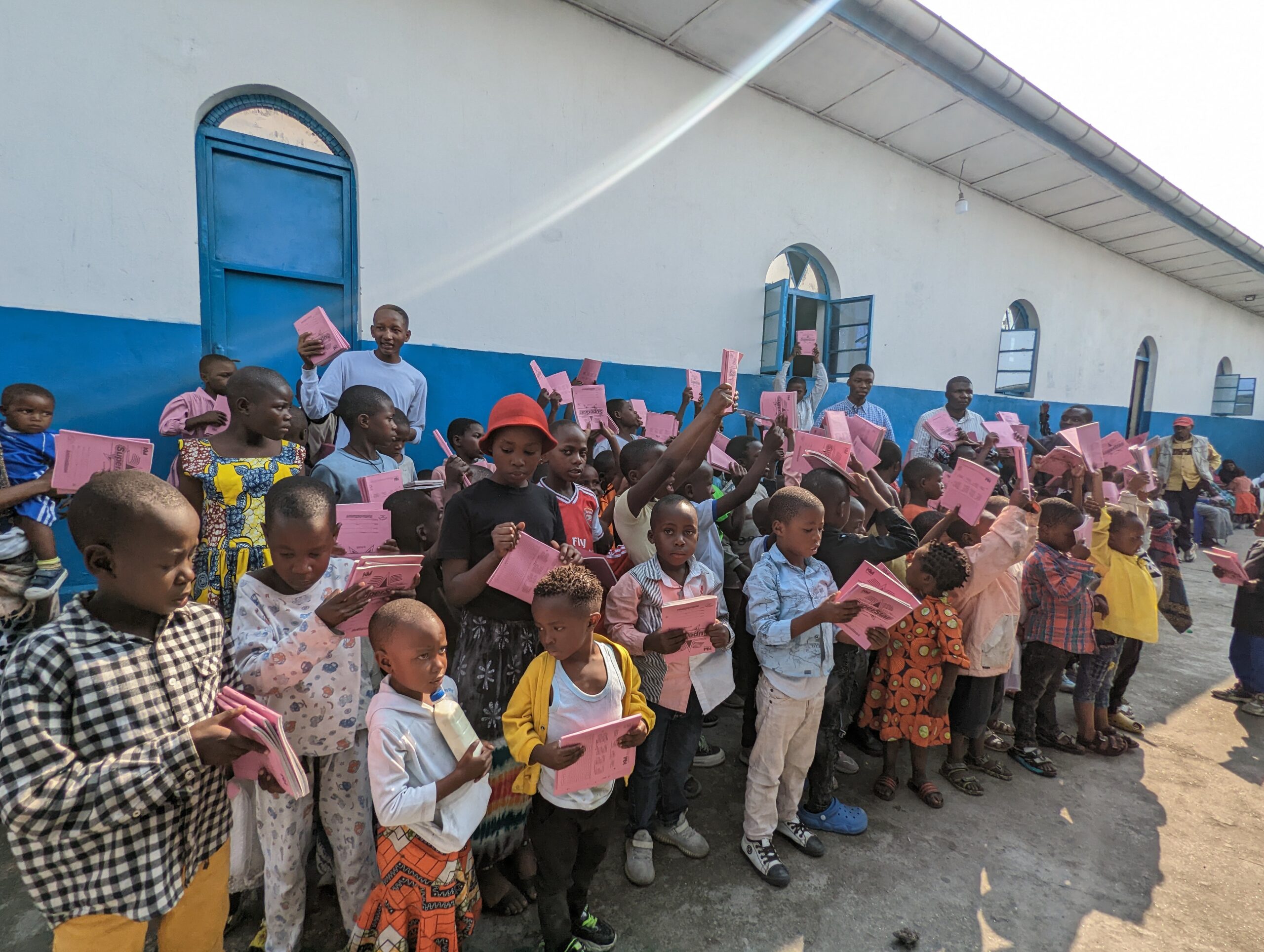
The number of school-aged children who gather every Sunday and on holidays, both for the Divine Liturgy and for the charitable meals (soup kitchens) offered by the Parish of Saint Nektarios, often exceeds one thousand children!
Consequently, the children, the future of the Church, are numerous and undoubtedly constitute a valuable spiritual asset. If we leave them without a school, they will deviate into delinquency and face the possibility of forced recruitment by the revolutionary and rebel groups active in our area.
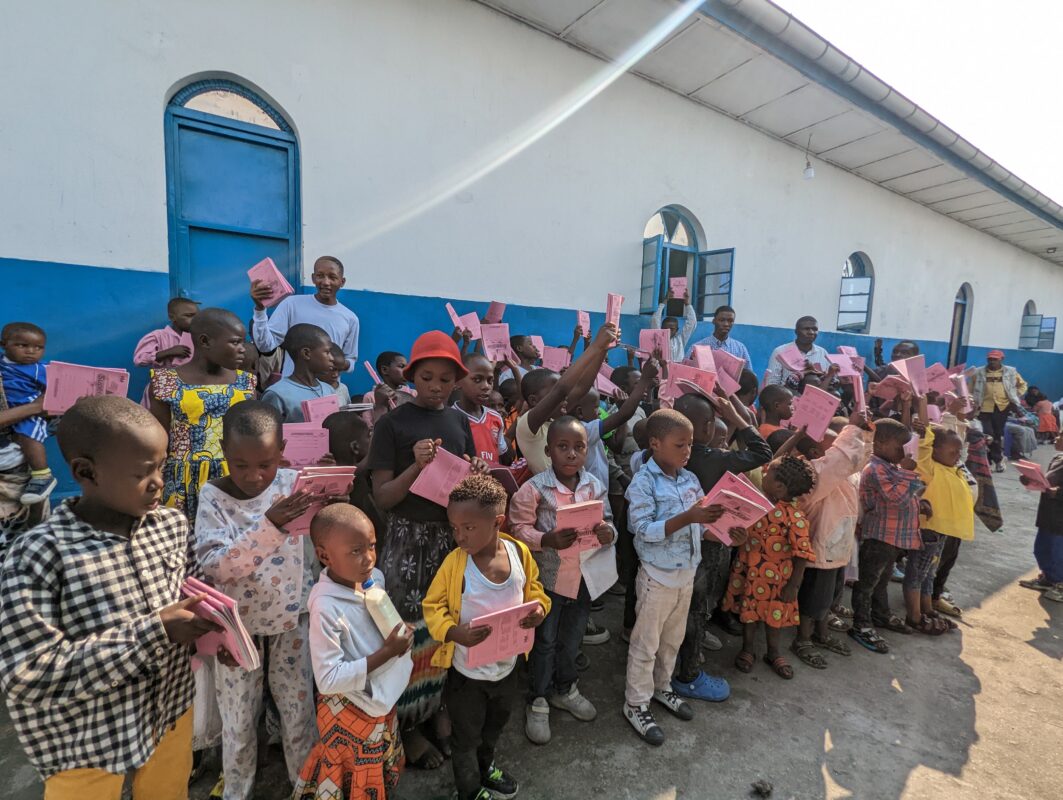
But for a school to be built and operated, considerable expenses are needed. Specifically, we estimate that $30,000 are needed first for the purchase of the plot of land, and $60,000 for the construction of the school building. The amount is large . For this reason, our poor and war-torn Diocese appeals to the philanthropic sentiments of our Fraternity of the Orthodox External Mission and asks for its assistance for the construction of its first school in Goma. We assure you that there is no dilemma “School or Church?” given that this is a spiritual work of primary importance, which will go hand in hand with the Church and will soon bear fruit a hundredfold. It is a work that will “open” other Parishes, other churches in our Holy Diocese of Goma and Greater Kivu. For this reason, pious donors and contributors will have the favor of Saint Nektarios of Aegina, Metropolitan of Pentapolis, and great reward from God.
Timotheos of Goma
Αυτή η σελίδα είναι διαθέσιμη και στα