The Dawn of Orthodoxy in the Caribbean
The Caribbean today represents one of the most challenging yet hopeful missionary fields for the Ecumenical Patriarchate. Across an area covering dozens of islands and countries, with a total population exceeding 35 million, Orthodoxy is slowly sowing its seeds.
Cuba: The Heart of the Mission
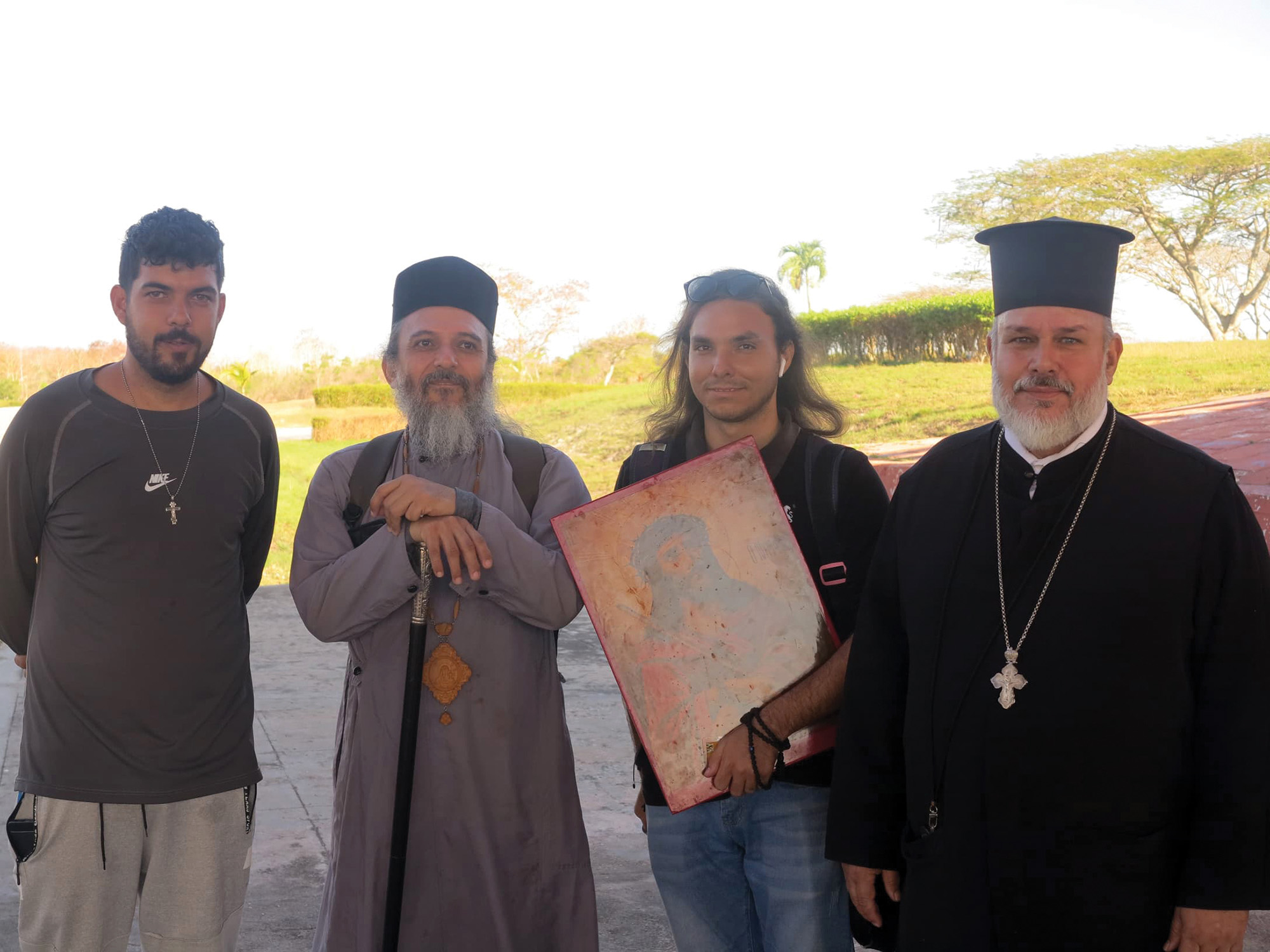
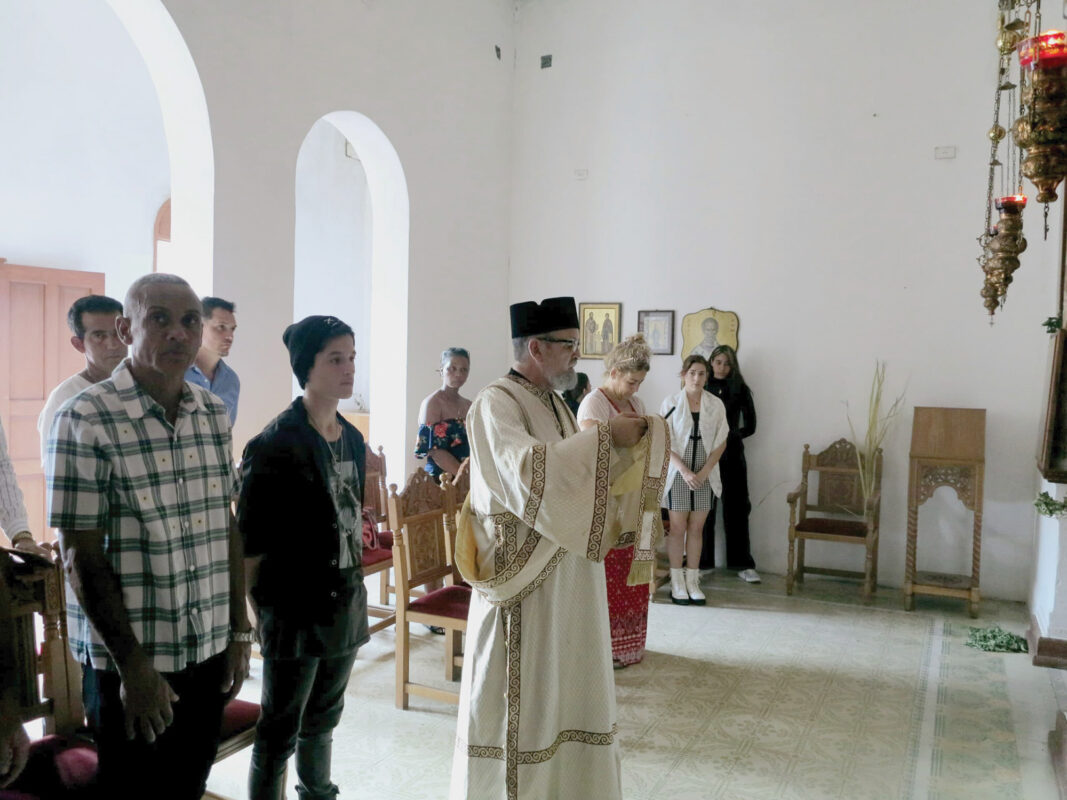
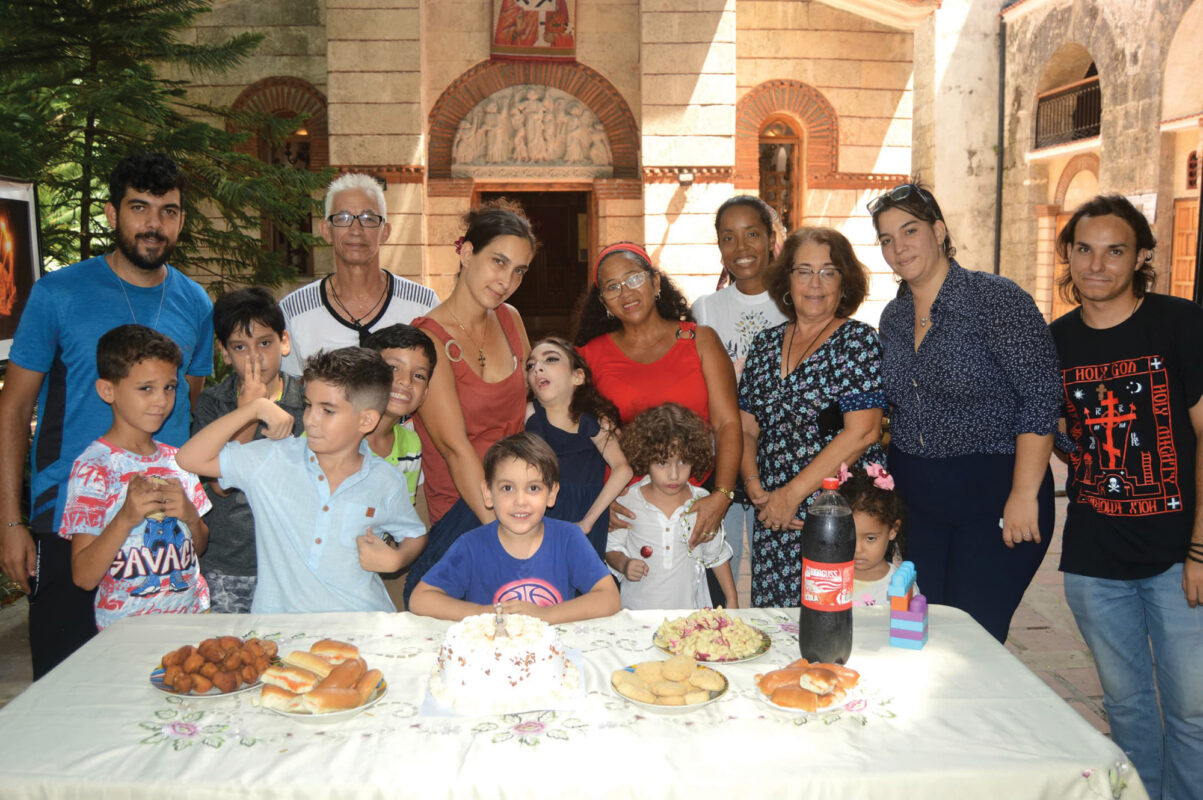
In Cuba, an island of 11 million inhabitants, we have managed to establish five parishes. Beyond Saint Nicholas in Havana, Saint George in Ranchuelo, Saint Paraskevi in Holguín, and Saint George the Trophy-Bearer in Varadero are also active. We also have a small monastery dedicated to Saint Spyridon. The distances are vast – from four to sixteen hours between parishes – and the lack of transportation makes pastoral work particularly difficult.
The recent visit of President Miguel Díaz to commemorate the 20th anniversary of Fidel’s meeting with the Ecumenical Patriarch brought a new wave of interest. The President venerated the Gospel Book and lit a candle – a scene watched by millions of Cubans on television. The result? New areas are requesting Orthodoxy, even in the remote Isla de la Juventud.
Today, we have 3,600 baptized Orthodox Christians in Cuba, although the economic crisis forces many to emigrate. Three priests and one hierodeacon serve the communities, which I have divided into three archiepiscopal districts: eastern, western, and central.
The Other Countries
In the Cayman Islands (200,000 inhabitants), we have 150 families in a pan-Orthodox community. Their faith was evident when, during the pandemic, a Russian priest attempted to officiate there. The faithful refused to recognize him without my blessing, demonstrating their devotion to the Ecumenical Patriarchate.
In Haiti (11 million inhabitants), Father Barnabas runs a school for 250 children and serves 2,000 families in Pétion-Ville, despite the civil war plaguing the country.
In Martinique, Archimandrite Lazaros has baptized 2,000 locals in recent years, although the lack of permanent housing makes it difficult to establish stable communities in this French overseas territory.
We recently opened missions in the Dominican Republic and Aruba, while in Puerto Rico, a former community that became Uniates is expressing a desire to return to the Mother Church.

The Challenges
The first challenge is the shortage of clergy. With only five priests for the entire region, we cannot cover all needs. The second challenge is linguistic: we need clergy who know Spanish, English, French, and Dutch. This is why I do not yet have a regional secretary – where can I find a multilingual secretary, and how can I pay them?
The financial burden is enormous. The salary I receive from a Metropolis in Greece (800 euros) only covers the priests. For everything else, we rely on a small exhibition of ecclesiastical items in Havana – icons, incense, candles, prayer ropes – which pilgrims purchase.
The Social Work
Orthodoxy in the Caribbean is not limited to worship. In Cuba, the philanthropic society operates a pharmacy that serves people from all over the country. We have 2-3 doctors who come weekly, offering free examinations. When a doctor earns $30 a month and a kilogram of milk costs $8, you understand why they need support.
We organize soup kitchens for families in extreme situations – many of whom are not even Orthodox, but find in the Church the love they do not find elsewhere. The philanthropic society visits homes, verifies real needs, and monitors faithful who are absent from services.
I also try to protect the youth. We have created jobs for 20 young people who work for the Church, to prevent them from being exposed to exploitation by sex tourists who flock to Cuba. Every salary is a burden, but every child protected is a victory.
The Needs
The needs are enormous. First, food – in Cuba, everything is inaccessible. Second, medicines – antibiotics, antipyretics, medications for diabetes, blood pressure, cholesterol, anything you can imagine. Hospitals are empty. I currently have a woman with cancer who cannot undergo chemotherapy because there are no materials.
Third, building materials – bricks, cement, iron. We need to finish Saint George, but we are afraid to buy materials because they sell us fake products. And of course, candles – even cooking oil for the vigil lamps is extremely expensive. We can only keep one vigil lamp lit in each church.
Our Hope
Many times I wonder why God chose me – I do not have the gift of knocking on doors asking for help, I am ashamed, I get upset when I am told no. But I firmly believe that the work does not belong to us – it is the Lord’s. I am simply His representative who goes wherever He sends me.
I turn to Saint Nicholas: “The work is yours – the Patriarch named you the protector of Cuba.” And immediately after two days, I experience a miracle – help comes from where I least expected it.
God Himself opens the way. Who would have imagined Aruba? Who expected the return of the Uniates of Puerto Rico? I am certain that slowly, on all the islands of the Caribbean, Orthodoxy will be glorified. The dawn has broken – now we await the midday sun.
† Athenagoras of Myrina
Assistant Bishop of the Caribbean
Αυτή η σελίδα είναι διαθέσιμη και στα