The entire report on the canonization of Saint Chrysostom the New Missionary
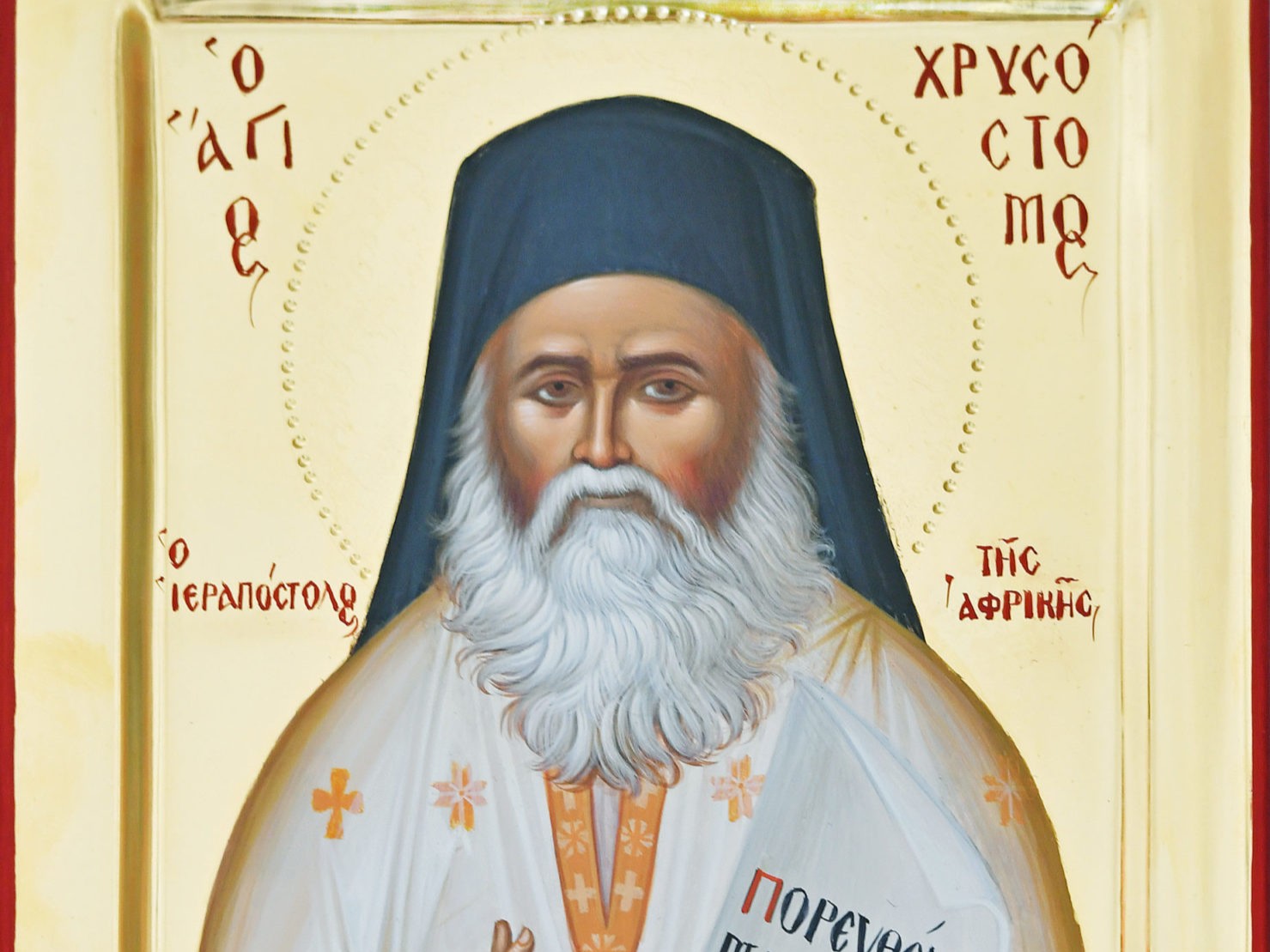
On October 8, 2025, the Holy Synod of the Patriarchate of Alexandria approved the canonization of the blessed Father Chrysostom Papasarantopoulos, the pioneering missionary of Africa. Today, on the first commemoration of his memory, we publish for the first time the report of His Eminence Metropolitan Theodosius of Kinshasa to the Hierarchy of the Patriarchate of Alexandria.
Report of Metropolitan Theodosius of Kinshasa on the canonization of the blessed Archimandrite Chrysostom (Papasarantopoulos)
Alexandria, October 2025
Most Blessed Father and Master,
Venerable members of the Hierarchy of the Patriarchate of Alexandria,
Allow me first to express my great gratitude to His Beatitude for the great honor of entrusting me with this present report concerning the sanctified figure of the great and fervent Missionary of our Patriarchate, Archimandrite Chrysostom Papasarantopoulos, and indeed before our Master, Sovereign, and Patriarch Himself, and the Holy Body of the Hierarchy of our Patriarchate. I humbly ask in advance for the leniency and forgiveness of all of you for what I shall present before you.
The sanctified elder and great missionary, Archimandrite Chrysostomos Papasarantopoulos, followed the path of the Holy Apostles, traveling to the Church in Africa. There, with the assistance of the All-Holy Spirit, he became an enlightener of the pure souls of the African brethren. The thought that he was alone did not discourage him. He was inspired by the words of Saint John Chrysostom “one zealous man is enough to correct an entire people” (PG 49,349).Despite the difficulties he encountered, his path was steadfast and his missionary spirit unyielding, because he experienced the presence of God in every step. Moreover, he founded his entire life on the person of our Lord Jesus Christ, who said: “without Me you can do nothing” (John 15:5)..
The Early Years (1903-1926)
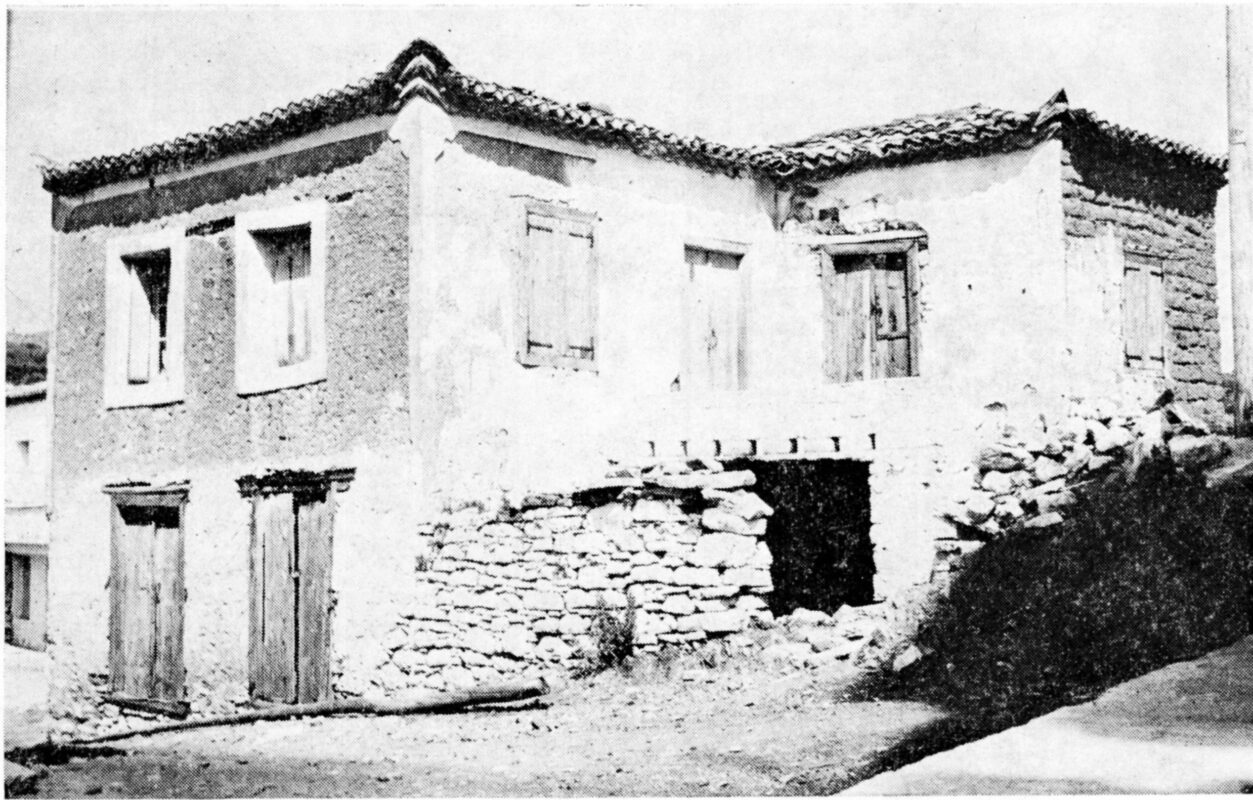
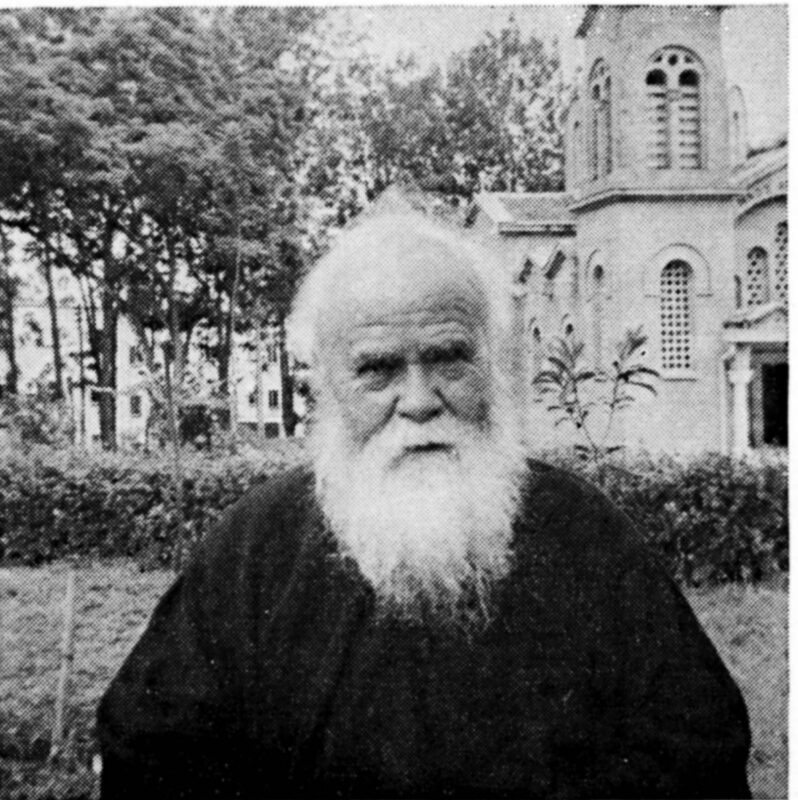
Fr. Chrysostom Papasarantopoulos was born in 1903 in the picturesque village of Vasilitsion, Pylia province, Messenia prefecture. His father, named Theodore, hailed from the village of Roino in Arcadia and was a stock breeder. His first wife died young, and he was forced to remarry Stavroula Trygourea, with whom he had three children: Basil, Panagiota, and Christos (this was Fr. Chrysostom’s secular name). Fr. Chrysostom was orphaned by his father at a young age, and his mother was left alone with three children.
The protection of the family was undertaken by the eldest son of the widow Stavroula, who, in order to meet the financial needs and without considering the excellent academic performance of young Christos, who was then in the third grade of primary school, withdrew him and assigned him to herd the sheep. Young Christos protested, as his soul burned for learning, but his brother remained unyielding.
His thirst for knowledge compelled him to carry books, magazines, and newspapers in his shepherd’s bag, in addition to his meager food, which he studied with passion. Since this resulted in neglecting the work for the flock and the sheep causing damage, his brother often punished him. However, he, especially during the night hours under the dim light of the oil lamp and in the absolute silence of the night, devoted himself to study. Everyone admired his strong memory, his multifaceted knowledge, and his insightful answers.
At the age of 15, he left the flock and secretly settled in the Monastery of Koroni for undisturbed prayer and study. The family, having learned of young Christos’s new residence, pressured him to return home, and he, in order to escape the continuous pressure, was forced to leave the Monastery of Koroni and settle in the renowned Monastery of Panagoulaki. Years passed, and young Christos progressed in asceticism, prayer, vigil, study, obedience, and all virtues.
The time came when he was called to serve his homeland as a soldier. There, everyone saw a different soldier: prudent, quiet, obedient, careful in every movement, a soldier who sought time for prayer. Time passed, and Christos was discharged from the army and returned to Panagoulaki Monastery, where he began his asceticism and self-education with greater zeal. Young Christos was called by Metropolitan Meletios of Messenia to become a monk and be ordained a cleric. On May 4, 1926, he was ordained Deacon and subsequently Presbyter with the name Chrysostom. He was appointed abbot of the Holy Monastery of Gardiki, where he brought his mother to care for him, and he tonsured her a nun with the name Sebastiania.
Ministry in Greece (1926-1958)
He also went to the villages of Vromovrysi and Lykotrafon as a temporary priest, which, unfortunately, had been inundated by many Chiliasts (Millenarians), and Fr. Chrysostom began a great struggle, on the one hand, to bring to repentance those who had become Chiliasts, and on the other, to protect the remaining villagers. Fr. Chrysostom opened against them the fire of his knowledge and burned down-refuted every claim of the Chiliasts, who, humbled, fled.
From the Holy Monastery of Gardiki, at his own request, he moved to the Monastery of Chrysokellaria, undertaking to serve the nearby villages as well. He also took charge of the children’s catechism classes, teaching them to chant the well-known hymns of the Church. He confessed people with great love and condescension and advised them to do only what the Holy Gospel and the Holy Canons of the Church teach.
Fr. Chrysostom later went to Athens, specifically to the Petrakis Monastery, and was enrolled as a brother of the Monastery. Until then, he had only received his primary school diploma through examinations, without having attended school, because he had excellent self-education. He was unmercenary, teaching that non-possessiveness is joy and freedom, which he himself practiced by giving his share of his paternal inheritance to his poorer sister, Panagiota.
His theological knowledge, even though he had not yet studied theology, was such that he defeated many heretics. A fellow villager of his, who was hospitalized in an Athens hospital, informed Fr. Chrysostom about the daily harassment from a Jew who visited the wards and preached anti-Christian sermons, causing confusion among the people. Fr. Chrysostom immediately visited the hospital and strengthened the faith of the patients, because with his theological knowledge he overturned the arguments of the Jew, who was then forced to leave the medical institution.
During the occupation, he served in Edessa as Protosyncellus. In those difficult years for Greece, Fr. Chrysostom offered great services to the suffering people. With sacrifice, he taught, admonished, confessed, comforted, encouraged, and supported Christians who were in danger of succumbing to the hardships of that era.
This man of God, Fr. Chrysostom, was endowed by God with many charismas, and among them, the gift of foresight. The blessed Metropolitan Nikephoros of Kinshasa, with whom both his family and he personally were closely connected, recounted the following incident:
When the blessed Nikephoros was constantly ill in infancy, doctors said he would not live. One day, however, a younger sibling suddenly fell ill and died. His father went and visited Fr. Chrysostom, finding him in the garden digging. The father began to weep for the loss of his child. “Father Chrysostom, why did God take my healthy child and not the sick one, George? (meaning Fr. Nikephoros).” “ My child,” Fr. Chrysostom told him, “God left George because he will save many souls in the world.” “.
Regarding his studies, Fr. Chrysostom, after primary school, attended the lower ecclesiastical seminary in Corinth. He received his degree from the Theological School of Athens at the age of 55. Furthermore, he was proficient in French, English, Latin, and Hebrew. The Lord’s command to the Disciples, “Do not acquire gold, nor silver, nor copper in your money belts…” had become his way of life. He did not love money, but always lived simply, and whatever money he had in his pocket he gave to the poor, the sick, and brethren in need.
The Call to Mission (1958-1960)
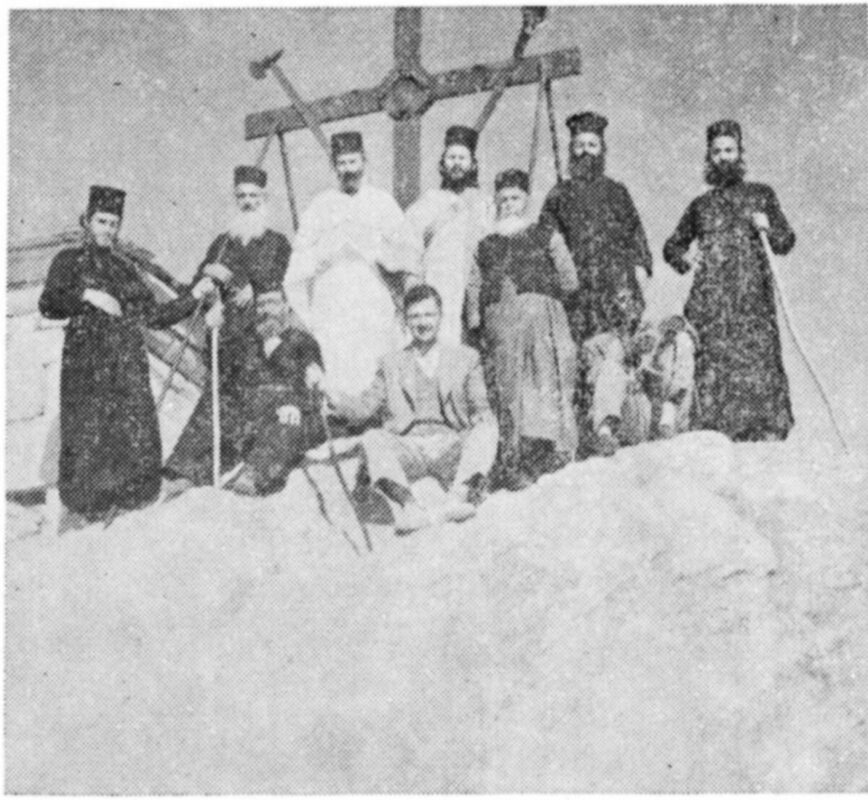
At that time, he met students from Uganda, especially Theodore Nankyamas, who later became a Hierarch of our Patriarchate. From what he heard, he became convinced that there was fertile ground for missionary work there. The flame of Mission ignited within him. This flame, this pious desire, now consumed his heart. A voice was heard in his heart, a voice urging him to leave his homeland and go to Uganda and dedicate the rest of his life to his African brethren.
After praying and fasting for many days, after imploring God to reveal His will to him with the Psalmist’s verses: “Show me, O Lord, the way in which I shall walk, for to You I lift up my soul. Teach me to do Your will, for You are my God; Your good Spirit will lead me on level ground…,” he made the brave and bold decision. “God calls me, I leave everything behind, I will go to help the brethren there.”
Many tried to dissuade him, mainly due to his fragile health, only to receive his stereotypical answer: “There are graves there too.”
First, Fr. Chrysostom wished to go to Jerusalem, where the Head of our Faith lived, taught, was sacrificed, and resurrected. There, Fr. Chrysostom also heard the Lord’s command, “Go therefore and make disciples of all nations, baptizing them in the name of the Father and of the Son and of the Holy Spirit…” (Matthew 28:19). These words of Christ brought a revolution to his heart; he implored the Lord to strengthen him in his new ministry and resolutely arrived at the center of our Patriarchate to entrust the desire of his heart to Patriarch Christophoros, to seek his blessing, his permission, and his prayers. Father Chrysostom was a man, a monk, and a cleric who always acted with the blessing of his bishop. And in this case, he could not begin any missionary work without the blessing of Patriarch Christophoros. The Patriarch, seeing before him a small-statured, elderly, and ailing clergyman, feared that he might become exhausted, fall ill quickly, and die. However, seeing his excessive zeal, he gave him his blessing to go where his heart told him to work as a missionary.
Missionary Work in Uganda (1960-1972)
Fr. Chrysostom was now in Kampala, the capital of Uganda. The difficulties were great, his money minimal, the needs many, but he himself was not overwhelmed. He wrote letters everywhere, asking for support. Friends and acquaintances, various associations, and later the Church of Greece, which appreciated his valuable work, supported him. In 1963, the missionary association named “The Friends of Uganda” was founded in the city of Thessaloniki by his spiritual children and friends. The unprecedented experiences and urgent needs he faced compelled Fr. Chrysostom to write to his spiritual friends: “Help me. The people here thirst for Orthodoxy, for Christ, and at the same time they hunger.” “.
They immediately responded to this call and formed the first missionary association in Greece with the aim of supporting him morally and materially in the fulfillment of his missionary work. From the outset, their main activity was the collection and dispatch of funds for the needs of the Mission, as well as the dissemination of the message of the Mission in Greek society. In 1978, the Association took its current name and, with its purpose expanded, continues to offer moral and material support to Orthodox missionaries in Africa, Asia, Oceania, and America.
He is tireless, despite his failing health, running everywhere to convey the redemptive message of Orthodoxy to more and more places. In his missionary activity, Theodore Nankyamas, later Bishop of Tanzania, greatly assisted him.
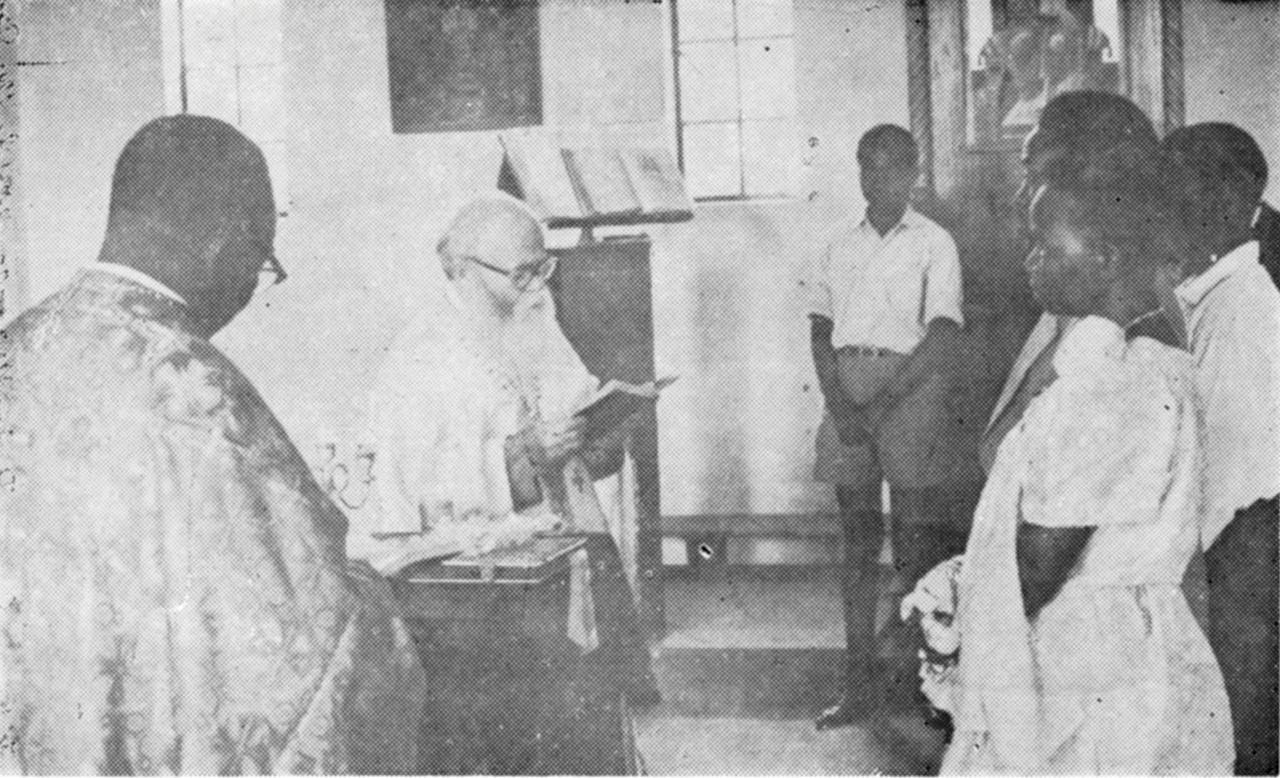
By learning the Swahili language, he devoted himself to translating the Divine Liturgy, the Apostolic and Evangelical pericopes, and various services. He also translated an Orthodox catechism, a valuable text for catechumens and those being baptized.
In Kenya (1968-1970)
God’s plan, however, is often different from our own thoughts and desires. The Metropolitan See was transferred to Nairobi, the capital of Kenya, and he continued his missionary activity there with the same zeal. He expanded to many rural villages. His expeditions continued into Tanzania. The distances were enormous; the elderly missionary ran, disregarding fatigue, difficulties, and dangers. He found solace in the fruitfulness of God’s Word. His own luminous example also contributed to this: “All for the glory of God and the salvation of mankind.” How does his example differ from the missionary activities of the Holy Apostles!!!
The African brethren were persuaded by the words of the father, abandoned idolatry, and were transformed into luminous children of the Church. The tireless worker of the Gospel covered distances, catechized, baptized, comforted, supported, and offered everything to his beloved African brethren.
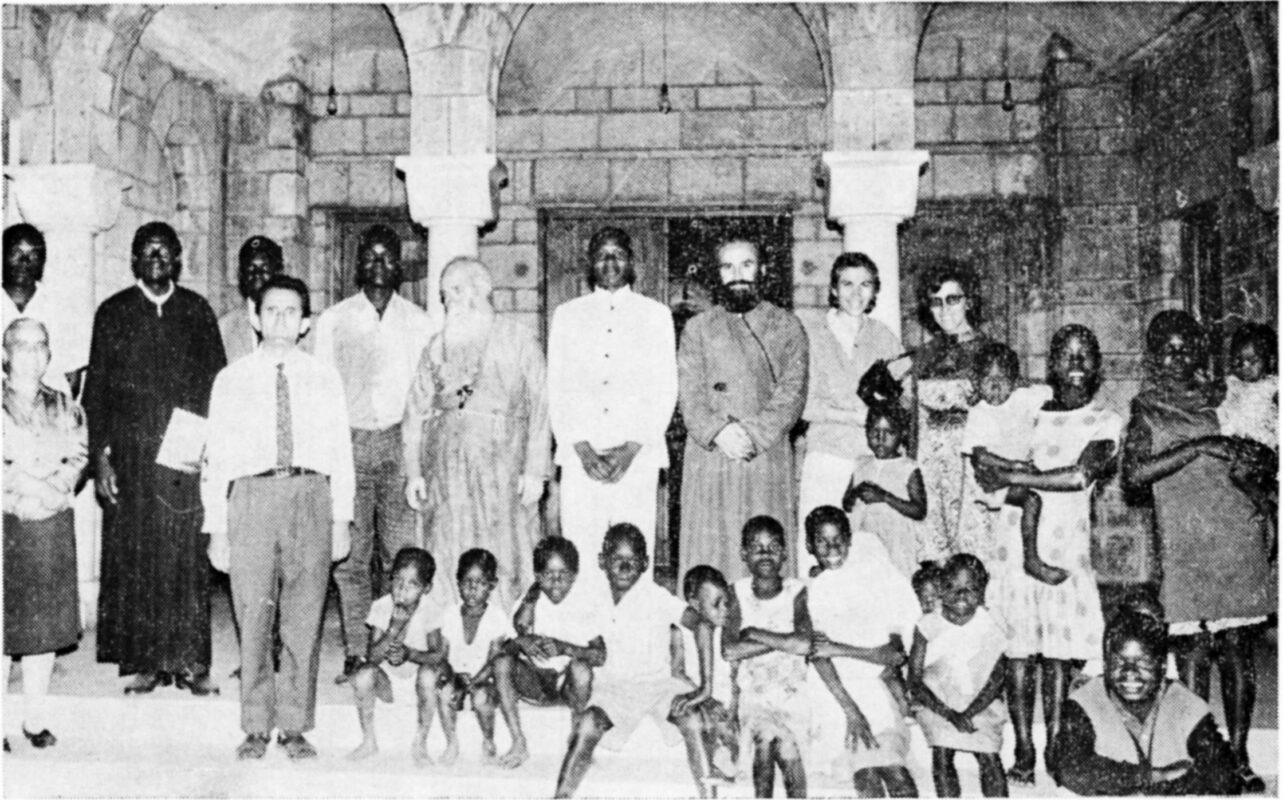
Fr. Chrysostom, however, also sought out those people who would assist him in the construction of Holy Churches. In Kenya, he undertook the construction of the Holy Church of Saint Eleutherios. At the inauguration of this Holy Church, where the people were enthusiastic about this unprecedented event for them, the father promised the faithful, “if God helps us, we will make them a hundred in this country.” Fr. Chrysostom was also a builder of Holy Churches, but in this, the current missionary Metropolitan Geron Makarios of Nairobi also contributed, as did the Hierarchs of Tanzania, where Fr. Chrysostom passed through, and all the provinces of the Throne, who ceaselessly build Holy Churches for the glory of God and the salvation of mankind.
Congo (1970-1972)
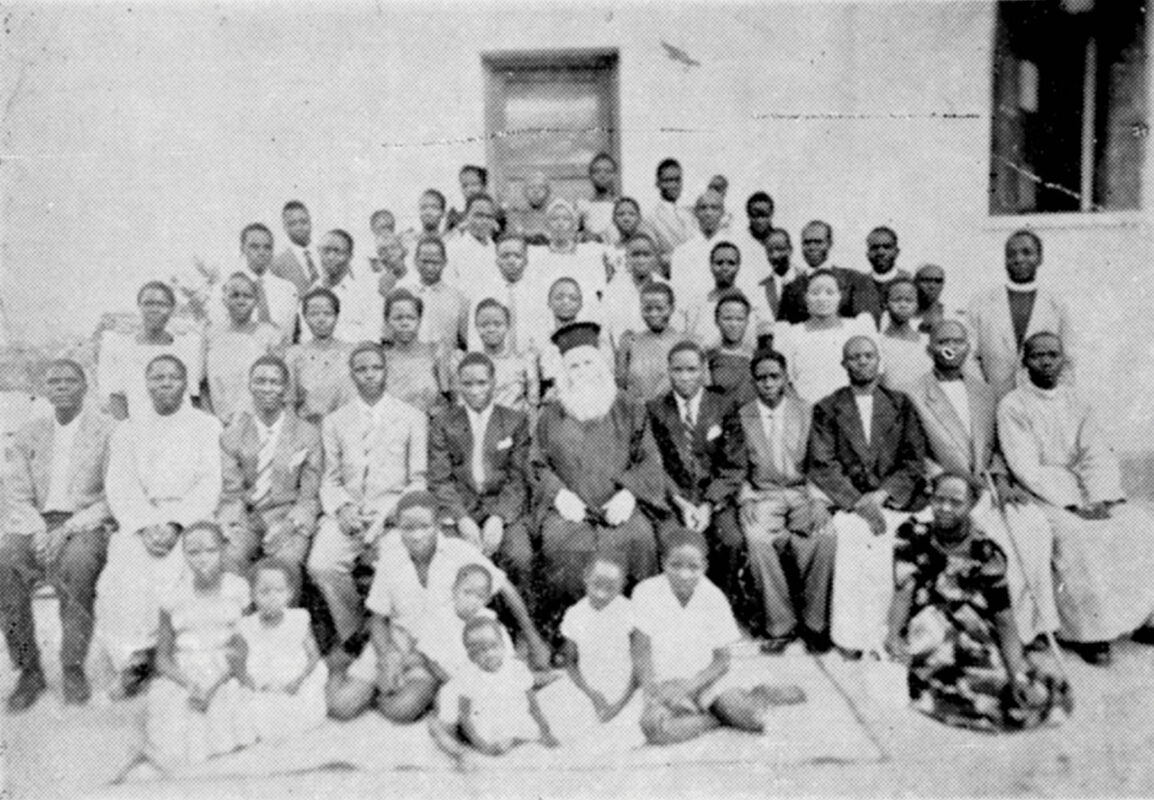
Often, human weaknesses become opportunities for the Word of God to be carried to other regions and countries. Fr. Chrysostom was not deterred by obstacles that arose before him, and accompanied by his missionary zeal, he reached what was then known as Zaire, now called the “Democratic Republic of Congo.” The needs were great then in Congo, but few were the people who would have to support the work. “The harvest is plentiful, but the laborers are few.” The elder was the founder of the Orthodox Mission in the Democratic Republic of Congo. Kolwezi, Kasenga, Kinshasa, Kananga have much to tell.
He arrived in Kolwezi in November 1970 and began his missionary work. After a short time, Metropolitan Cyprian of Central Africa sent him to Katanga, where he worked for both Greeks and indigenous people. From Kananga, indigenous Protestants learned about Fr. Chrysostom’s presence in Katanga, and many of them hastened to implore him and ask him to go to Kananga and bring Orthodoxy there as well. They spoke to him and told him that thousands of people were waiting for him, as he wrote to the then Hieromonk Nikephoros Mikragiannanitis, who later became Metropolitan of Kinshasa. The late Metropolitan of Kinshasa maintained communication with Fr. Chrysostom since his student days, with continuous correspondence between them (his letters are in the archives of the Metropolis of Kinshasa), and with the efforts of both, Fr. Nikephoros was to come down and help him. The reason why the blessed Metropolitan of Kinshasa could not come to the holy elder was beyond his will.
The holy elder passed through Kinshasa in 1971 for a short time, and the Greeks there tried to keep him with them. But Fr. Chrysostom was convinced that he had to go to Kananga. He then wrote to the blessed Nikephoros of Kinshasa,
“Despite my old age and fatigue, I can still do something. I give you this information to rejoice, and all you fathers and brethren, pray especially fervently. Committees came and came again from the interior of Congo and asked me to go to them so that they might collectively join Orthodoxy. Pray and intercede.”
Fr. Chrysostom arrived by train in Kananga in early October 1972, accompanied by Sister Olga. Then, as the then young and later priest Fr. Cyril wrote, he called the leaders of the sects and held a meeting, in the presence of the local minister of justice, and spoke to them about Orthodoxy, saying among other things, “Seek the truth, and today you have found it.” The now blessed Fr. Cyril notes, “ he was so convincing. His preaching was like milk and honey, which they had never heard before, neither from Catholics nor from Protestants.” “.
His Dormition in Kananga (1972)
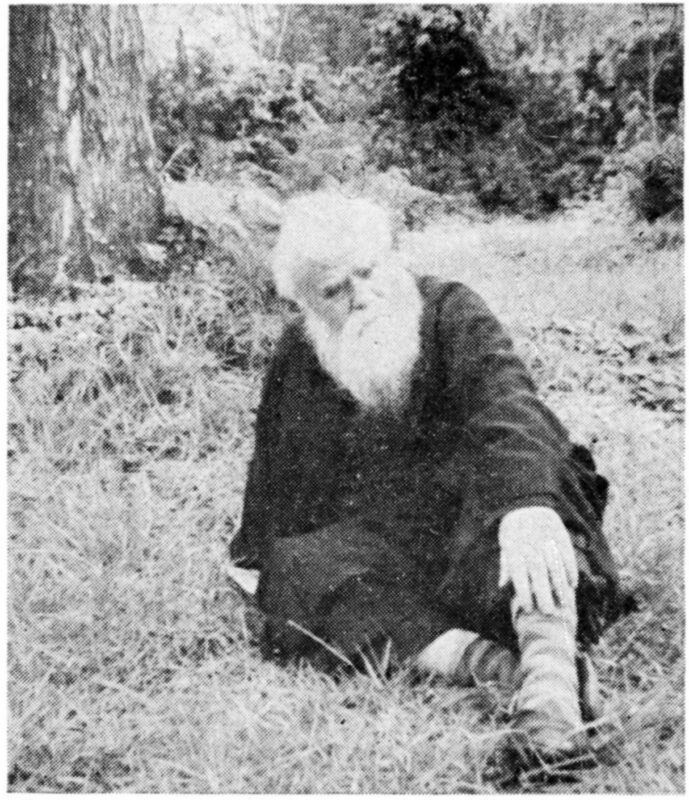
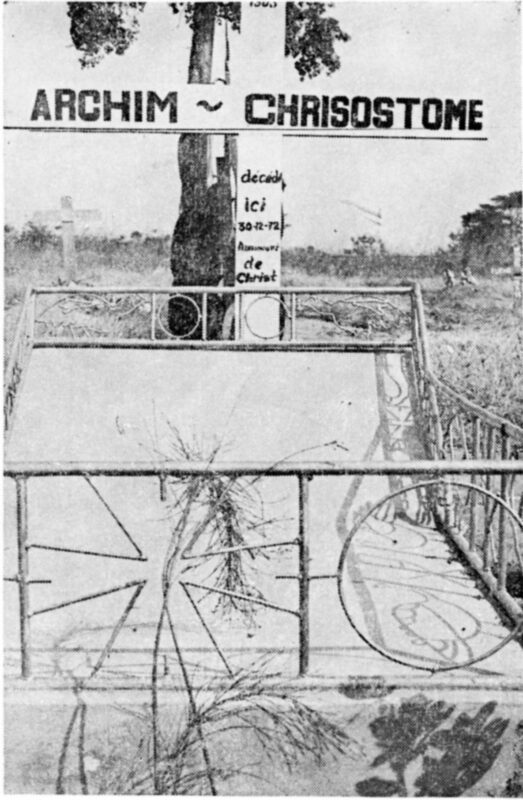
Fr. Chrysostom immediately began the first catechisms, baptisms, weddings, Divine Liturgies, and missionary expeditions. On December 13, Fr. Chrysostom, accompanied by Sister Olga, departed for Buzumai. During the journey, the car got stuck in the sand, and they tried to free it. Fr. Chrysostom withdrew a few meters because he was not feeling well. At one point, Sister Olga looked for him and found him bleeding. They moved him to a clinic in the nearest village and then returned to Kananga for Fr. Chrysostom to receive appropriate treatment. His health improved slightly; on December 25, he celebrated the Divine Liturgy with great difficulty, his strained voice indicating the seriousness of his condition. On Monday, December 26, in the morning, he was admitted to the Kananga Clinic. On December 29, he surrendered his sanctified soul to the chosen one of his heart, our Lord Jesus Christ.
The faithful of Kananga undertook his funeral arrangements, with whatever prayers they knew, with their traditional songs and customs. No Orthodox priest was found to perform his funeral service. What he used to say to those who told him to return to Greece came true: “ It is better to die ingloriously in Africa than gloriously in my cell, in my quietude. I cannot leave here, I do not want to, something holds me.” As they were taking him to the city cemetery, Catholic priests stopped them and asked to offer a prayer for Father Chrysostom, since there was no priest. Days later, the General Archiepiscopal Commissioner, Fr. Emmanuel Zoppas, arrived from Lubumbashi and read the funeral service over the grave, telling the newly enlightened faithful, “my brethren, the deceased is alive… what happened was the will of God.”
Indeed, he departed as a martyr. He himself used to say, “Here, some must bear witness for our mission to begin.” He himself not only shed his blood, but every toil, every difficulty, every temptation, was also a martyrdom for the holy father.
Testimony and Holiness
His work, however, was not in vain. Fr. Chariton Pneumatikakis, with whom he had a friendly and spiritual relationship from old times, from when they served together in Edessa, a brother of the Theologians “O SOTIR” and Hieromonk of the Metropolis of Patras, succeeded him in this God-pleasing work in Kananga.
In one of his last letters, on November 7, 1972, he wrote to the then Fr. Nikephoros and later Metropolitan of Kinshasa
“But if you knew the dire situation I am in – old and very tired – here, you would abandon everything and even beg to find the expenses to come to me. I am now almost in the center of this vast country, and seventy and one hundred thousand Africans seek to enter our Orthodox Church. What can I do first – especially being so weak – for this multitude? And they are not all together in one parish, as in Athens and Thessaloniki, but scattered over a large area. I, of course, by the mercy and power of our Savior Christ, will struggle, dedicating my last strengths to this rampart, and perhaps I will die fighting on the front line. But you, as a brave young man, at least undertake to tell all our students and seminarians, all our younger unmarried clerics, the following verse of the ancient Tyrtaeus to the warriors of ancient Sparta. I read it in a modern Greek translation when I was a primary school student, and I remember it:
“Shame on you! Shame on you if the young man is behind, And the weak old man dies in front.”
Not that I am worthy or that I offer anything, a negligible and unworthy laborer of the Lord, which I am. But why should many of the fervent young people who dedicate themselves to Christ – or at least some – be here? My many blessings to your fellow students and good success and progress. Your struggle is not for a small position with a meager salary, but for something high and eternal.”
This was the ecclesiastical ethos of the holy father: spiritual, humble, with complete devotion to the work God revealed to him, with obedience to the Church, with patience, ready to die for the love of Christ, despising everything worldly. All for the glory of Christ and the salvation of mankind.
Regarding Fr. Chrysostom, his successor and collaborator from old times in the city of Edessa, the great and sanctified missionary Archimandrite Chariton Pneumatikakis, characteristically writes:
“This half-man, with broken health, with a weak, emaciated body, soft-spoken and slow of tongue, deprived of impressive external qualities, needed immense boldness to possess and just as much self-denial for his daring endeavor. He had it and he used it. That is why “Covered by God, the slow of tongue in darkness, He eloquently preached the divinely written law,” ” Fr. Chariton continues, “When, years ago, in 1965, the Theological School of Thessaloniki went to Uganda with its Dean, the then Mr. Ieronymos Kotsonis, and Archbishop of Athens and All Greece, at a reception in Kampala, one of the entourage of the Theological School observed that Fr. Chrysostom was very worn out and expressed the opinion that he should return to Greece now. Then the African Orthodox Major of the Police, Jonathan Sentegaya, interjecting, said:
Fr. Chariton continues, “When, years ago, in 1965, the School of Theology of Thessaloniki went to Uganda with its Dean, the then Mr. Ieronymos Kotsonis, and Archbishop of Athens and All Greece, at a reception in Kampala, one of the entourage of the School of Theology observed that Fr. Chrysostomos was very exhausted and expressed the opinion that he should return to Greece by then. Then the African Orthodox Police Major Jonathan Sentegaya intervened, saying: ” “No, Fr. Chrysostom should not leave, he should stay here, to die in our country, so that we too may have a holy relic, because Fr. Chrysostom is a saint.” These things he said and wrote in the magazine “Protoklitos,” of the Association of Orthodox Foreign Missionaries of Patras.
Fr. Chariton, in the magazine “DRASIS” of the C.F.D. in 1973, wrote the following about Father Chrysostom:
“Now our Orthodox African brethren also have a holy relic! This is what those who lived with him more than anyone else, who loved him and were loved by him more than anyone else, say.”
Also, the blessed Theologian Athanasios Fragkopoulos of the Brotherhood of Theologians “O SOTIR” wrote:
“Multitudes of angels and archangels received his blessed soul into heaven, to enroll him in the choir of the great champions of faith and apostles of the Gospel. On the day of judgment and recompense, the souls of our black brethren, who were regenerated by Father Chrysostom through Baptism and nourished with the Bread of Life and nurtured with the streams of Orthodoxy, will form a brilliant crown, which will adorn him and which, together with the twenty-four elders of Revelation (4:10-11), he will lay down “before Him who sits on the throne” so that he too may sit on thrones of heavenly glory and honor “clothed in white garments,” thus enjoying “the reward of faithful and wise stewards,” for all that he tirelessly served sacerdotally for forty years for the glory of the Heavenly Head of the Orthodox Church.”
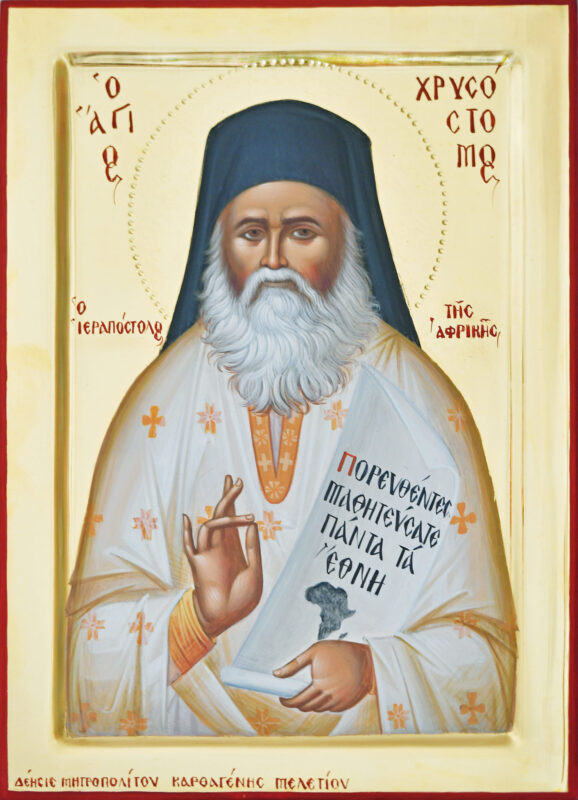
We therefore have, on the one hand, the consciousness of the Orthodox in Africa that Fr. Chrysostom is a Saint, and on the other hand, the faith and conviction of great ecclesiastical figures, as well as the general fullness of the Church, regarding the holiness of the father. Wherever Fr. Chrysostom passed, he left the reputation of a holy monk, cleric, and missionary. His life was pure as untrodden snow; it shone like gold and like a diamond. His face radiated light, the Light of Christ. His passage spread fragrance, the fragrance of Christ. His spiritual word was fiery yet sweet, comforting, and restful. Our African brethren loved him as their true father, because he was a father, because for them he became a stranger, he left everything behind like the Apostles of Christ, to win the pure hearts of the Africans, or rather, for Christ to win them. Fr. Chrysostom passed his missionary examinations with flying colors!!!
He faithfully followed the words of Saint John Chrysostom: “he who strives to snatch a brother from the jaws of the devil imitates God” (Catechesis VI, 19) and “for each of us is responsible for the salvation of our neighbor” (EPE 29, 316). Fr. Chrysostom became a model of offering and sacrifice. The demand for role models is a strong desire and request of every human being, every place, and every era. Thus, the African Continent can look to the figure of the holy man and imitate his Christ-like conduct, because holiness is possible for all through the grace of God within the Church, which is a workshop of holiness.
A man like Fr. Chrysostom, who kept the word of God “You shall be holy, for I the Lord your God am holy” (Leviticus 19:2) and taught “by word and deed” the path from “according to the image” to “according to the likeness,” deserves to be placed “on the lampstand,” so that “it may give light to all who are in the house, that people may see his good (missionary) works and glorify their Father who is in heaven” (Matthew 5:14-16).
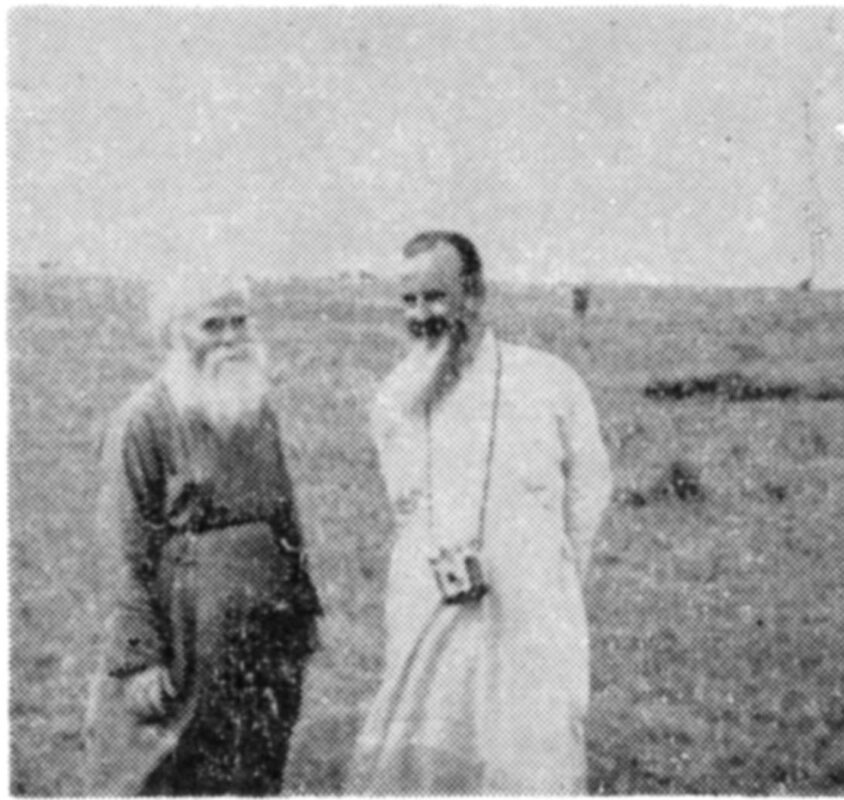
Certainly, in the loving heart of our Patriarch and all of us who constitute the Holy Synod of our ancient Patriarchate, the Patriarchate of the Apostle and Evangelist Mark, in all our hearts, the voice of the Lord calls out to us that Fr. Chrysostom is a saint. Our Patriarchate, which from the first century until today evangelizes and preaches “Jesus Christ and Him crucified and risen,” our Patriarchate, which has produced thousands of Saints (Hierarchs, Confessors, Ascetics, Martyrs), continues to produce them, and they adorn our Patriarchate and our Orthodox Church.
Personally, I seek Your leniency for anything I may have inadvertently missed in my humble presentation before His Beatitude and the Holy Synod, and I ask you to pray that “Divine Grace, which always heals the weak and supplements what is lacking,” may strengthen all of us, and through the intercessions of the Venerable Archimandrite and great Missionary Chrysostom Papasarantopoulos, may it empower us in the ministry to countless people of our most venerable Patriarchate, who thirst for Truth and Orthodoxy.
“O Saint of God, great Missionary and enlightener of the Church in Africa, intercede with the Merciful God to grant forgiveness of sins to our souls.”
Headings and formatting have been added for easier reading.
Αυτή η σελίδα είναι διαθέσιμη και στα