Galateia Soureli on Saint Chrysostomos Papasarantopoulos
…Shine upon us…
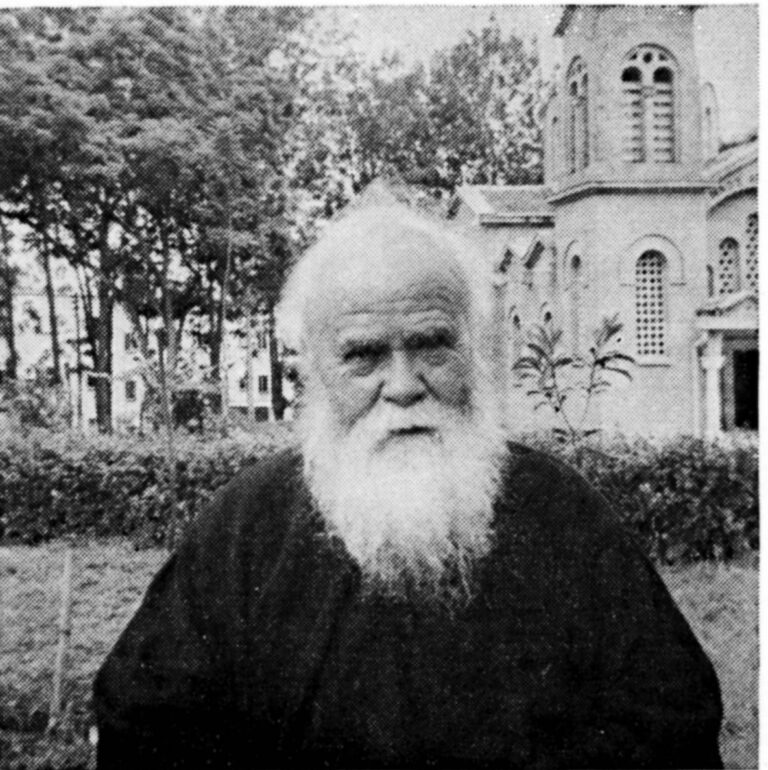
It hasn’t been two months since the news was published in the newspapers. Not in the Athenian newspapers. No, in the others, the provincial ones. “Archimandrite Chrysostomos Papasarantopoulos passed away.”
Only one newspaper, locally connected to the deceased, dedicated a two-column article on its inner page with the title: “The Ardent and Heroic Missionary” subtitle: To the black angels.
I wonder at this moment if I should begin this way. Or should I begin like a fairy tale, “once upon a time…”. Because the life of Chrysostomos Papasarantopoulos greatly resembles a fairy tale. A harsh fairy tale, however, a fairy tale that would not end with “they lived happily ever after, and we even better”. Because neither did he “live” well, and woe to us if we, at peace, “live better”.
So, let us begin. In the Metropolis of Edessa in 1946, an archimandrite serves — Chrysostomos is his name.
He is a simple, joyful priest who, when walking through the narrow streets of Edessa, goes completely unnoticed. The only thing that distinguishes him is the rumor that this forty-year-old priest attends high school. “It’s never too late” . The archimandrite smiles broadly when asked how he decided to finish high school. “It’s never too late” he repeats to himself to give himself courage when writing irregular verbs in his Grammar notebook.
He cooks for himself, keeps his home for himself, gathers young people around him; he is moved by young people, he speaks to the souls of young people. He speaks in a different way. Not with a grand sermon. Because — here lies the contradiction — he does not have the gift of speech. He knows it and has accepted it.
And yet he “speaks” incessantly. And excellently. He speaks through example, he speaks through printed material, he speaks through the unique — as many say — confession he offers. He is a formidable “speaker” to the hearts of young and simple people. And he himself is so simple. The common priest, without many theological discussions, without significant stature, without outwardly great gifts, the priest who could disappoint any “intellectual.”
At night, when everyone is quiet, in the Metropolis of Edessa, he alone with some used books, with some outdated methods, learns English. He doesn’t consciously know why he is learning it. Unconsciously, however, he feels that this must happen because, who knows, it might serve God’s plan. He comes here to Athens, and at fifty years old, he finally has his diploma from the School of Theology. He is also appointed to a parish. By human standards, he is perfectly settled.
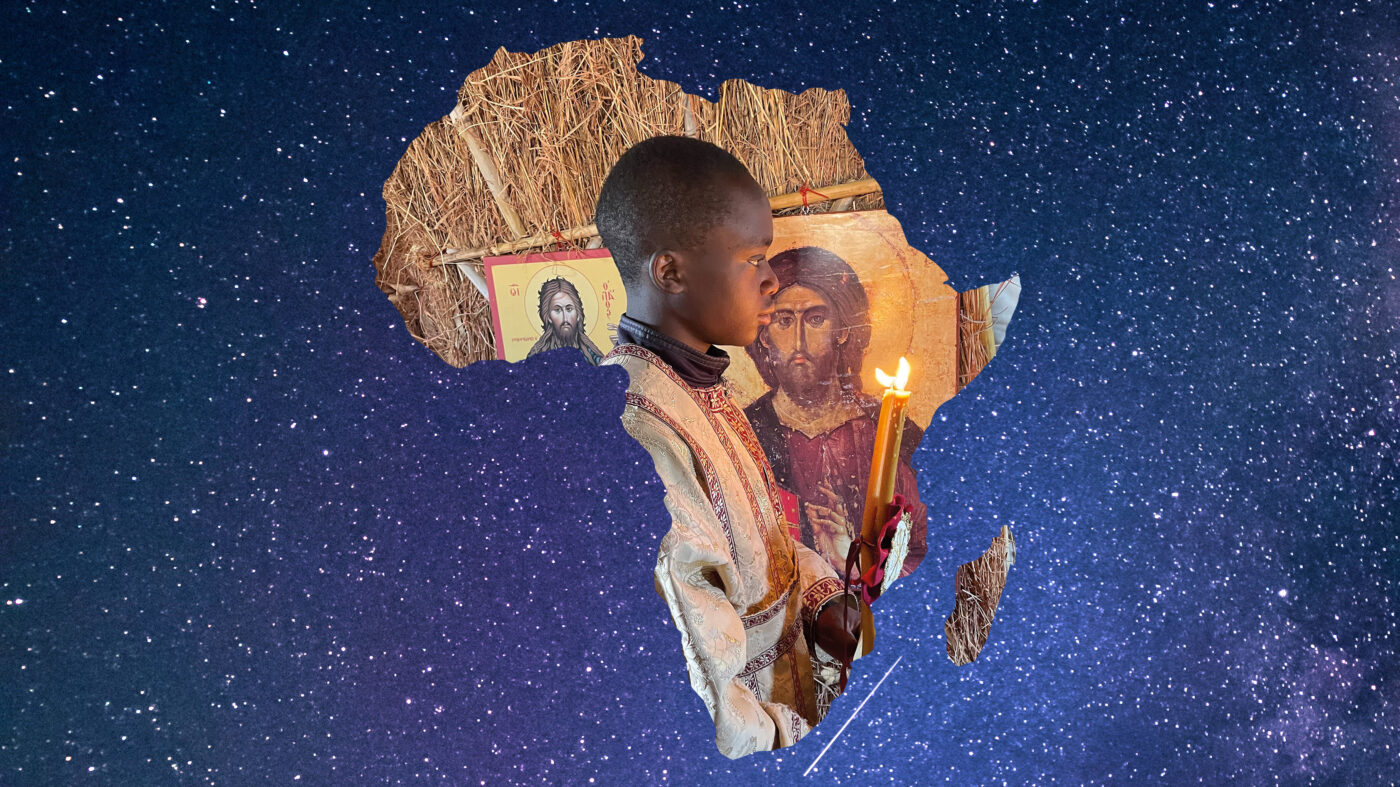
By human standards. Because he does not rest. He always publishes his printed material in whatever parish he finds himself. He writes in the student yearbook while studying. And alone, when night falls, he learns French. Those who knew him at this time speak of his outward tranquility and the glow of restlessness in his eyes. He has met some African students, scholarship recipients, and the weight of an entire continent — Africa — seems to have settled on his shoulders. And one day, in early 1960, he clearly heard within himself the forgotten commandment: “Go therefore and make disciples of all nations.” It is the last commandment. The Lord’s last words, “Go therefore,” before the Ascension. Usually, when we are about to part from someone, in the last hour we say the most significant things. The things that must not be forgotten. Christians, however, did not give due importance and weight to this commandment. That is why I refer to it as forgotten. “Go therefore and make disciples of all nations!” .
Archimandrite Chrysostomos has not slept peacefully for many nights. His terrible headaches are not to blame. He has grown accustomed to those, as they have tormented him for years.
His slight hand tremor is not to blame. No. These are not to blame. What is to blame is the profound impact that meeting the Africans and the forgotten commandment had on his soul. And one day, with a small, light suitcase—how few his possessions were—he set off. To go where? And with what money? Where would he find the fares? There are some things that defy logical analysis.
Or rather, there are some people who believe so strongly in their idea that they do not accept logic as an obstacle.
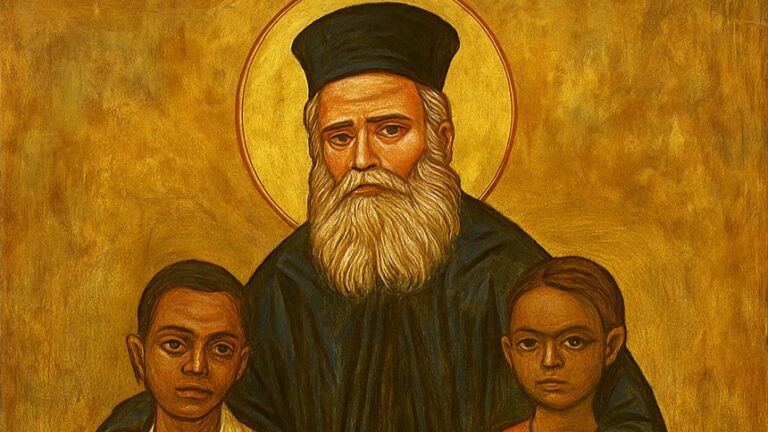
So, a simple priest, outwardly “unremarkable,” arrives in Uganda in 1960. The Greek community does not await him there. The Church or the Missionary offices do not await him. Such things do not exist there. Orthodoxy does not have the organized missions of the West. Chrysostomos knows this. And that is precisely why he is there. And then he understands that if he does not learn “Swahili,” the language of the Africans, he cannot open the hearts of his black brethren. He studies again, becomes a student again, and simply, humbly, and wholeheartedly, begins to sow the divine seed in the thirsty land.
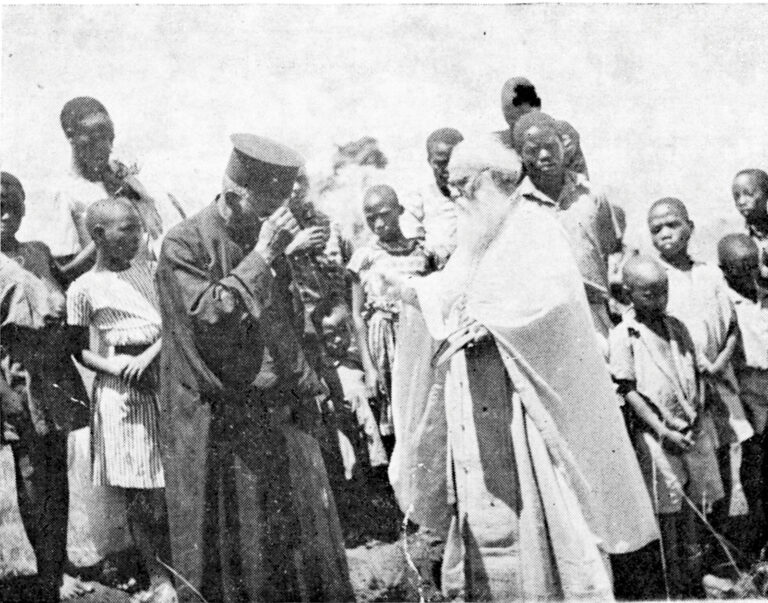
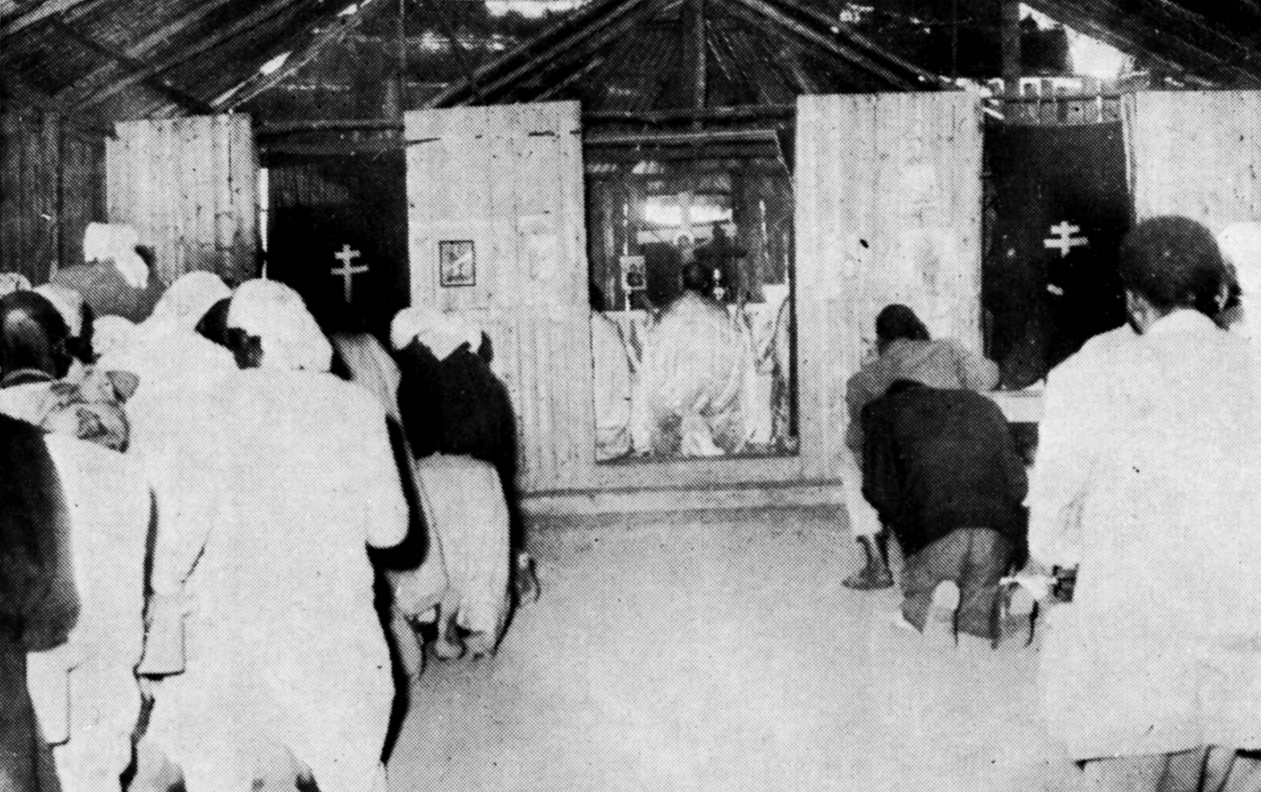
Catechesis, liturgies, baptisms, church building. It is characteristic how a church is built. There are no funds, no money. Faith, however, makes the believer inventive — and Chrysostomos’s faith is great — as is his inventiveness.
There are photographs showing one of the ways money was raised.
Women, men, and children went to work in a field. They dug it, they sowed it. With the daily wages, the wood was bought, and the mud was made. “And we — the missionary simply writes to a friend — will strive to find money to put a tin roof over them.
The work that unfolds is immense. The distances are enormous. The difficulties are fantastically great. He works all day, struggling with stomach pain, struggling with the tremor in his hands.
And at night he must struggle with the loneliness that surrounds him, the terrible loneliness. He has no one beside him to tell his dreams, his thoughts, his sorrows, and his disappointments. Alone in the cold African night, with swollen feet from walking or cycling — his parish covers 50 miles — he translates the Holy Scripture into “Swahili.” Occasionally, a letter is sent here to Greece that also contains cries of despair
I have much to write to you and I would very much like to, but my strength has abandoned me. No one yet among the ardent younger ones has decided to come to my aid. May the Lord of the harvest provide…
Uganda, Tanzania, Kenya, Rhodesia, Congo receive his Christian message. From Greece, messages of hope begin to be sent to him. The Greek navy at the naval base sends him bells for the churches he built. Baptismal fonts are made from tin, and there the simple priest baptizes, and Africa hears the song of Orthodoxy for the first time and hesitantly begins to sing it. He regularly publishes his “Information Bulletin.” In it, he writes about what happened in the “Lord’s vineyard.”
It seems that one day the difficulties would be greater and his courage less. He then takes up his pen and writes the fervent “Fraternal letter, to a hesitant brother in Christ.”
Beloved brother in Christ,
We do not know why you have delayed for months now in answering us… I knew you as both pious and courageous during your student years. What is happening then?
This letter is so paternal: You think it was written for you personally by your simple father: First the scolding, then the paternal and most pedagogical “I knew you as both pious and courageous…” meaning “what happened to you?” and then the gentle pressure, the perfect explanation of the difficulties that he himself will smooth out again.
“You are not going into the unknown!” he assures. And he concludes with a supplicatory tone:
My brother, since you have heard the voice within, overcome your inner hesitations. Close your ears to what others say. Make the sign of the Cross and set off. The rest belongs to our Heavenly Father…
And the other cry reaches us from his “Bulletin.” “I repeat the appeal: ‘Shame, Achaeans!’ and I eagerly await the young men who will support His Eminence the Metropolitan in the heavy and arduous, yet so glorious work of the mission.”
Thirteen whole years passed this way. In 1971, the missionary came to Greece. But he stayed for a very short time. He was in a hurry to go down to his “black angels.” His health condition was poor. Friends told him to stay. He shook his head negatively. Africa was calling him…
Father Chrysostomos Papasarantopoulos.
Born in Vasilitsi, Kalamata in 1903
Departed in Belgian Congo on December 29, 1972
at 9:12 PM
The message reached here. Of course, the sorrow of the “black angels” did not reach here.
But the song of Africa, which has begun, reaches here. And something else reaches here. The message of the simple priest.
Shame, Achaeans! I eagerly await the young men, the young women who will come. That is why I was buried here. To wait for them. Just don’t delay, young man. You see, I knew you as pious and courageous. Make the sign of the Cross and set off, my child! The heavy but glorious work of the mission awaits you.
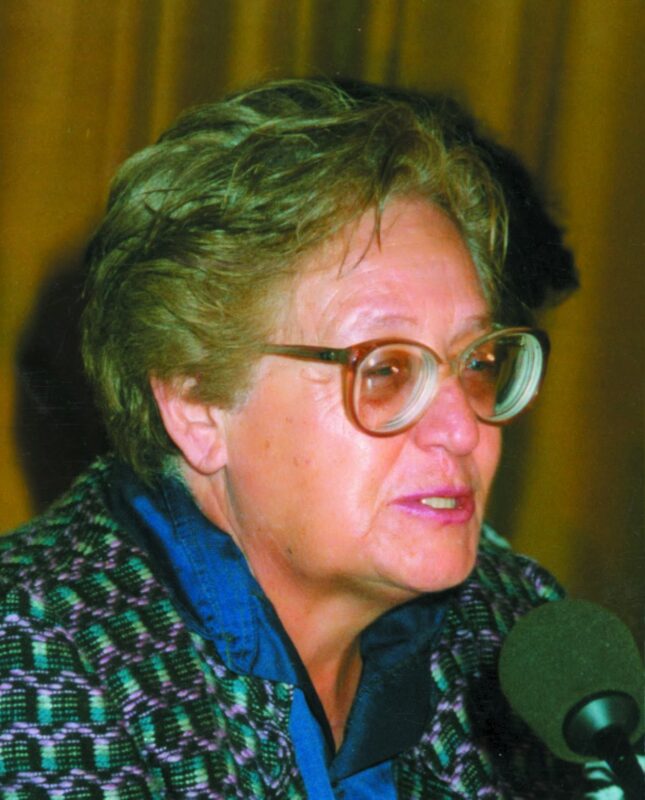
Galateia Soureli
From the magazine “ALIEUS” of the Holy Metropolis of Kyparissia, issue 53 – March 1973
Αυτή η σελίδα είναι διαθέσιμη και στα