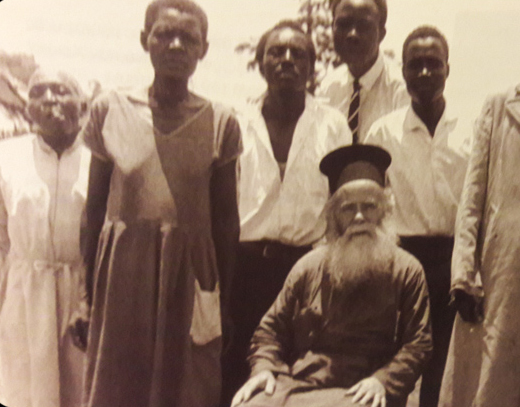
A Partial Autobiography of Saint Chrysostomos Papasarantopoulos
From the commemorative volume IN MEMORY OF IOIL GIANNAKOPOULOS, edited by Georgios Koudelas – Publication of the Christian Home of Kalamata 1968.
My friends in Christ from Kalamata asked me to write something about the late Father Ioil. Something worthy of inclusion in the forthcoming commemorative volume dedicated to that holy man. […]
From that young age — indeed, precisely then — our lives became very closely intertwined, and I trust I will not be misunderstood for somewhat subjectively intermingling my own unworthiness.
1918 — THE PANAGOULAKIS ASCETIC RETREAT
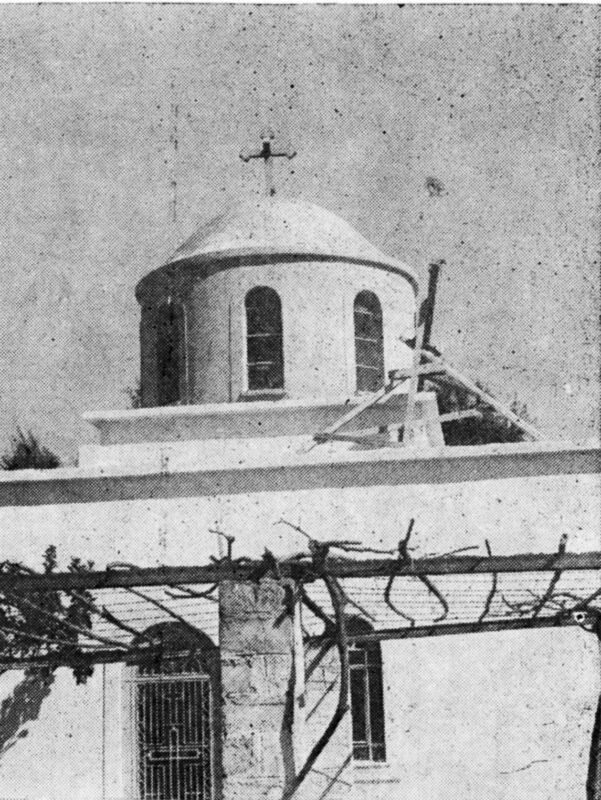
On the outskirts of Kalamata and near the main road to Alagonia, a little above the city’s Cemetery, which the people of Kalamata call the Metropolis, there still exists today the Panagoulakis Ascetic Retreat, known throughout Messenia. It is a kind of small men’s monastery, whose monastics follow the Old Calendar, independent of the canonical local Ecclesiastical Authority. Its founder was Ilias Panagoulakis, a fanatical ascetic and faster, who applied excessively exhausting ascetic struggles to himself and his disciples.
In early 1918, Ilias Panagoulakis died relatively young from exhaustion, and he was succeeded by Georgios Anagiereas, perhaps more ascetic for himself, but considerably more lenient towards others.
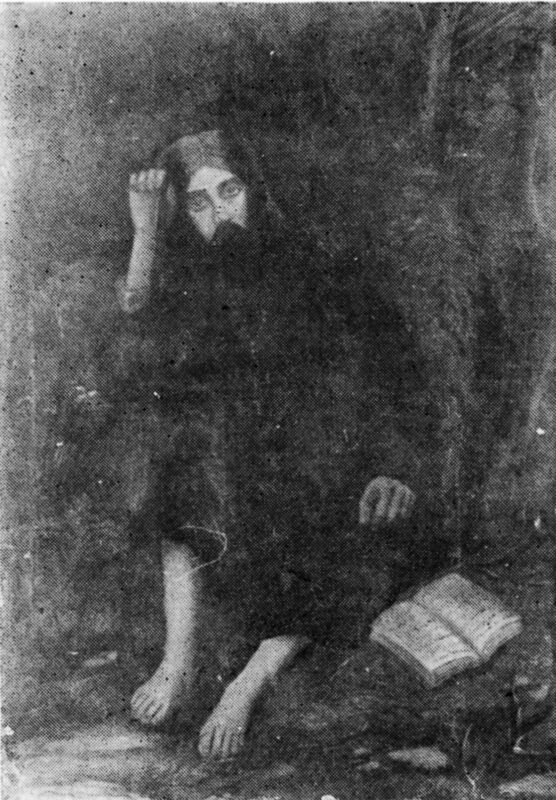
In the autumn of the same year, at the age of 16, I also entered the aforementioned ascetic retreat. Certainly, not many days passed before I met the 18-year-old high school student Fotios Giannakopoulos. He lived with his paternal family in Paralia of Kalamata, where they ran a small hotel, and he was a regular listener of the ascetic sermons, but also particularly familiar (as were many others of various ages) with its staff (5-6 people), being able to visit the ascetic retreat at any time. He was, one might say, an external ascetic. All together, the few internal and the many external, formed the “Company in Christ,” supported by many pious benefactors, called “subscription supporters.”
It was not the proximity of age that particularly drew me to young Fotios. […] Thus, despite the monastic and especially the ascetic rules, which forbid particular friendships, our hearts found themselves very close.
THE LOVE FOR LEARNING
It was also my great love for learning that subconsciously pushed me towards the virtuous high school student. I do not remember anyone else in our company at that time who was engaged in learning. Because from early childhood, due to successive family difficulties, I had not been able to enjoy schooling beyond the 4th grade of primary school — and I had loved schooling terribly — I had devoted myself as much as possible to self-education. When later, at 14, I wholeheartedly dedicated myself to religion, my initial impulse towards all learning was interrupted and unilaterally redirected, but it remained in my subconscious.
FRIENDSHIPS
In this way, we became so closely connected with the late one that what happened between Basil and Gregory, the Fathers of the Church, when they were young students in Athens, was realized between us: “One soul in two bodies.” I do not remember exactly when the third person entered our youthful company, the active Emmanouil Themelis, now Father Eusebios of Kalamata.
In our frequent meetings, Fotis always had the first word, and the Christ-centeredness of his discussions captivated us. He transformed everything and revolved it around the divine person of our Lord and God and Savior. His somewhat slow tongue was for us “a flowing spring sweeter than honey.”
IOIL GIANNAKOPOULOS
[…] Thus passed the first two years of our acquaintance and friendship. The high school student received his school diploma, and his homeland called him to serve. It was the Asia Minor War, and the recruit quickly found himself there. Then began a fervent correspondence between the soldier-warrior Fotis Afotistos and the novice monk-ascetic Christos Antichristos (we continued to sign ourselves thus).
I will not mention anything from our correspondence, except for my somewhat coup-like contribution to his university education. An opportunity was given to reservist high school graduates to enroll in the University and, with the passage of years, upon discharge, to take corresponding exams and complete the remainder of their studies. So he wrote a letter asking the Elder and his fellow ascetics for their opinion on whether he should study (Theology, of course) or not. Everyone agreed that once discharged, he would enter the ascetic retreat, and further education was completely superfluous and useless. I said, let us have an educated person in our company, but they did not heed me. Immediately after the discussion, I wrote to him that he absolutely must enroll and study, diplomatically implying that everyone consented.
IN THE ARMY
After the Asia Minor national misfortune, the terms were reversed. The young monk Christos Achristos was called to serve the homeland, and Fotis Afotistos became a student and, shortly after (having completed his years in the army), a graduate of Theology. Thus, the first ceased to be useless and the second unenlightened. The fervent correspondence continued as long as they served far from Kalamata, but in the summer of 1924, having entered the reserves, I was stationed there.
SELF-EDUCATION
I said at the beginning that I have a sacred obligation towards this holy soul. A large part of my self-education I owe to the inspirations and practical advice of Father Ioil, and particularly to the fulfillment of my effort to learn foreign languages, which one day were to serve me so much in the work of our Savior Christ.
ORDINATION
On May 4, 1926, I was ordained Deacon by the late Metropolitan Meletios of Messenia, and the following day Presbyter in the Holy Monastery of Gardiki. My most revered Archimandrite Polykarpos Andronis, now Head of the Brotherhood of Theologians “ZOE,” then hieromonk of Messenia and my spiritual father, and my beloved young Deacon Father Ioil, now serving in the eternal monasteries of the Kingdom of Christ, were those who presented me.
Concluding, I must thank those who so kindly and piously took the initiative to publish the Commemorative Volume, as a lasting memorial to a holy worker of the Gospel and Christian virtue, because they gave me this good opportunity to repay a small fraction of my spiritual debt.
In Nairobi, Kenya, East Africa, from the place of my sojourn in Christ.
First days of February 1968.
Archimandrite CHRYSOSTOMOS PAPASARANTOPOULOS
Αυτή η σελίδα είναι διαθέσιμη και στα