The Seminal Word in Africa
Among our African ancestors, the knowledge of God was largely intertwined with beliefs about divine powers attributed to deceased ancestors, known as ancestor worship. These beliefs are embraced by Christianity as a starting point for preaching, corrected, and given their true meaning. This understanding of our local brethren helps us build a bridge between the evangelist and the hearer of the Word.
Saint Justin uses this reality to speak about the seminal Word. In all ancient traditions, there is the seed of the Word of God, especially in the conscience of every people. Of course, this knowledge contains errors that the Christian faith completes and corrects.
We find references to the “seminal Word” not only in ancient philosophers, such as Socrates, who speaks of one God (using the singular ‘God’) while living in a polytheistic world, but also in many other philosophers and wise people of other nations.
1. In antiquity, our ancestors believed in life beyond the grave. They believed that humans continue to live after death in an unknown place, where they need clothes and food from the living. They would go to graves to leave various items, leading to ancestor worship. There is, therefore, an entire eschatological teaching. The Orthodox Missionary begins his preaching from these teachings and speaks about the resurrection of the dead, memorial services, and prayers for the repose of souls. Ancestor worship is corrected by speaking about the Saints of the Church, how a Saint is honored after death, with the clarification that they are not worshipped but venerated. In Orthodox Tradition, we venerate the Holy relics of Saints who partake in and transmit the grace of God. A Saint is “universal,” belonging to the entire Church and not exclusively to their tribe.
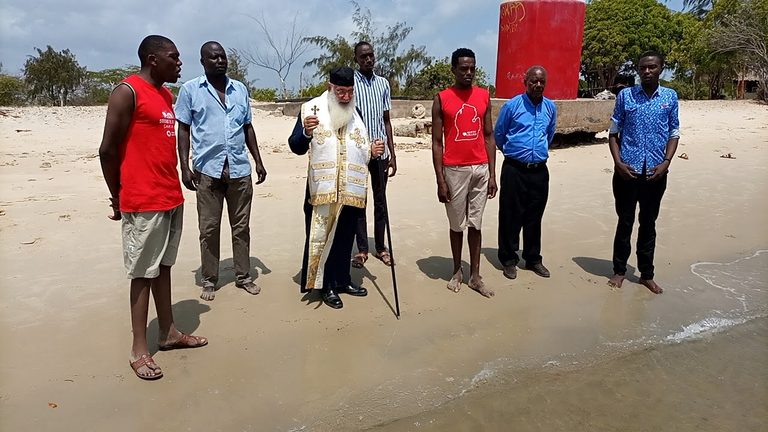
2. There was a naming ceremony among Africans. Until a child received a name, they were not truly considered a person. Starting from this point, we can analyze the significance of Christian baptism and the name one receives, a name written in the Book of Life. For Christ, the inscription of the believer’s name in the Book of Life is very important: “rejoice that your names are written in heaven.” From there, we can speak about the power of the Name of Jesus in the prayer “Lord Jesus Christ, Son of God, have mercy on me,” which summarizes the entire Orthodox faith.
3. The belief in the presence of God was deeply rooted among Africans. They were God-centered in their ancestral customs. When someone was going on a journey, others would wish them “may God grant you a good journey.” They always held the idea that good was not the fruit of human efforts, but of the favor of the Supreme Being.
They wanted their God to be like them. They would ask: “Does Christ know how to hunt? Why do we only hear you talk about fishing?” This reality led to several Protestant Bible translations in various Congolese languages translating Christ’s words to Peter as “follow me, and I will make you fishers of men,” even though the original text is “I will make you fishers of men.” We observe their desire for God to resemble them, a tangible realization of the existence of the seminal Word, since Christ came to earth like us, except for sin: “And the Word became flesh and dwelt among us.”
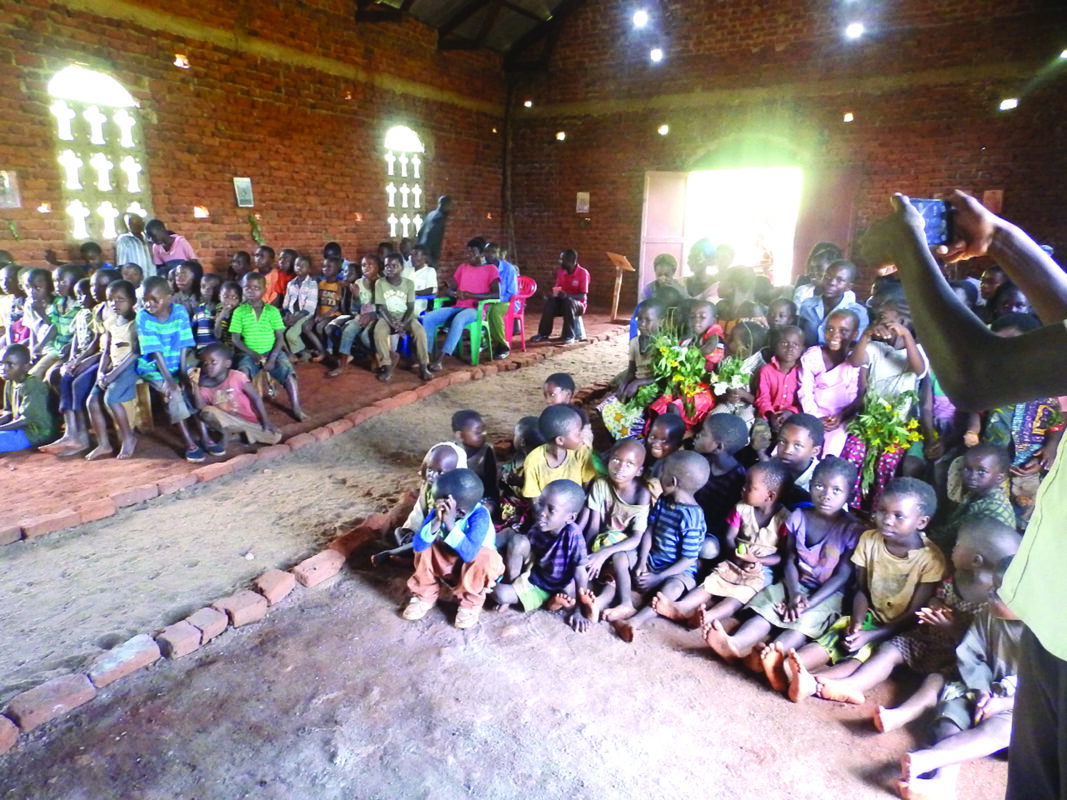
4. Feasts for ancestors always began in the evening with preparations and ended the next day. The evening was for preparation, while the morning was the main day of the feast. This is why Africans today easily understand why we celebrate Vespers, which is the preparation for every feast in Orthodoxy.
5. Even people who practiced magic, when they failed at something, would say that “God did not will it.” Here Christ comes and adds: “But even the hairs of your head are all numbered. Do not fear therefore; you are of more value than many sparrows” and “not a hair of your head shall perish.”
6.. They held great esteem for virtues. A woman had to be provident. She should not go out at night to ask a neighbor for salt. This stance can be utilized in Christianity, speaking about our obligation to always be provident and consistent in our spiritual life.
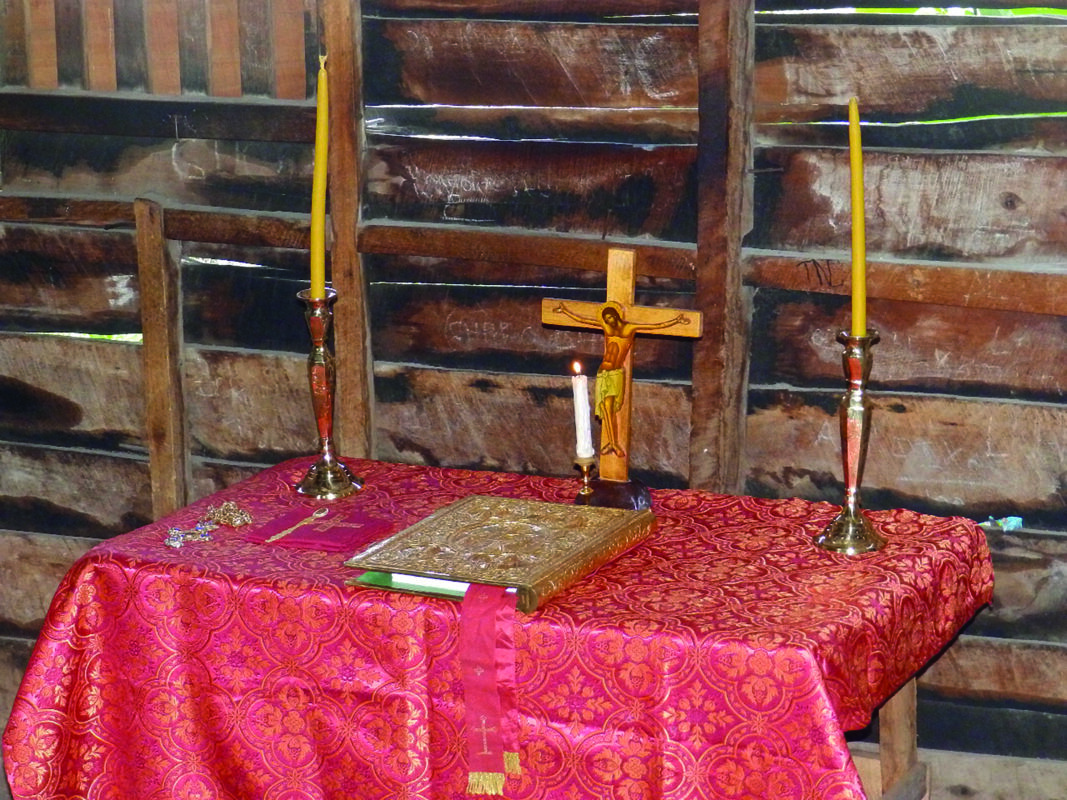
7. There is something reminiscent of the parable of the ten virgins. Our ancestors highly valued virginity. A virgin girl provided the right to demand a larger dowry for her. This fact had an educational character for other girls. In Christianity, those who maintain virginity are honored, provided they do so for the Kingdom of Heaven. They have an obligation to connect virginity with almsgiving, to be prudent, to keep their lamps burning, awaiting the encounter with their Bridegroom, Christ, who “is the light that enlightens every person who comes into the world,” to whom all glory, honor, and worship are due, together with the Father and the Holy Spirit, now and forever and unto ages of ages.
† Timothy of Goma
Αυτή η σελίδα είναι διαθέσιμη και στα